# Finding Sacred Meaning in Everyday Tasks: A Guide to Spiritual Practice in Daily Life
The profound wisdom contained in these pages offers a transformative perspective on one of the most fundamental questions seekers have asked throughout history: How do we integrate spiritual practice into our ordinary, everyday existence? Rather than presenting spirituality as something removed from daily life—confined to meditation cushions or mountaintop retreats—this work reveals how the most common, humble activities become pathways to enlightenment and personal transformation.
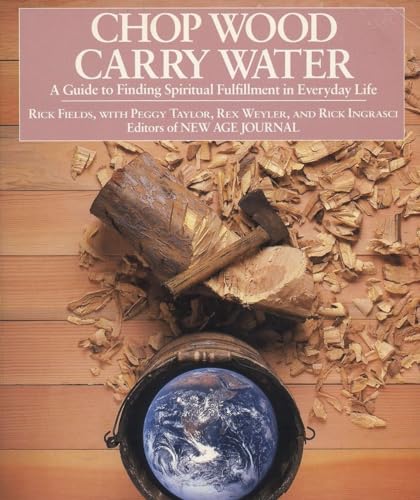
At its heart, this exploration draws from the rich traditions of Zen Buddhism, where the title itself references a classic teaching story. In Zen monasteries, students would inevitably ask their teachers: "What happens after enlightenment?" The master would reply simply, "Chop wood, carry water." This seemingly straightforward answer contains layers of meaning about the nature of awakening and how spiritual realization must manifest in the tangible world of action and responsibility.
The book guides readers through the essential understanding that spirituality is not escapism but engagement. It challenges the common misconception that personal growth requires withdrawal from the world or abandonment of practical responsibilities. Instead, it demonstrates how washing dishes, preparing meals, earning a living, maintaining relationships, and handling life's countless obligations become opportunities for profound spiritual development. This is good news for anyone who has felt torn between the desire for inner peace and the demands of modern life.
Throughout these pages, you will discover how consciousness itself transforms when we bring full awareness and intention to even the most mundane tasks. The practice of doing one thing completely, with full attention and presence, shifts our entire relationship with life. Rather than rushing through necessary activities to get to something "more important," readers learn to find the sacred within the ordinary. This shift is not merely philosophical—it produces tangible changes in stress levels, productivity, satisfaction, and overall sense of meaning.
The work explores how traditional spiritual disciplines adapt to contemporary circumstances. Whether you are a parent raising children, a professional navigating workplace challenges, an artist pursuing creative expression, or someone managing health concerns, the principles presented here show how your specific circumstances become your spiritual practice ground. Your life, exactly as it is currently unfolding, contains everything necessary for growth.
One of the most valuable aspects of this exploration is how it addresses the integration challenge that modern seekers face. Many people maintain a divided life: a spiritual self that emerges during meditation or at retreats, and a conventional self that operates in the world. This creates internal fragmentation and limits the transformative potential of practice. The teachings here point toward wholeness—a unified way of being where spiritual awareness and daily responsibility are not separate but seamlessly woven together.
Readers will also gain insight into how patience, diligence, and commitment manifest through repeated engagement with life's necessary tasks. These qualities, developed through sustained practice in the everyday, become the foundation for deeper spiritual development. You cannot bypass this stage by seeking only transcendent experiences. True transformation requires showing up consistently, doing what needs to be done, and finding the practice within it.
This perspective also offers profound psychological benefits. It eliminates the pressure to achieve some perfect spiritual state while relieving the guilt of being "in the world." Instead, it provides permission and direction to fully inhabit your life while simultaneously awakening within it. The ordinary becomes extraordinary not through escape but through presence.
For anyone feeling caught between worldly demands and spiritual aspirations, this essential guide offers reconciliation. It demonstrates that the most direct path to awakening often involves not rejecting life but deepening our engagement with it through conscious awareness and intentional action.