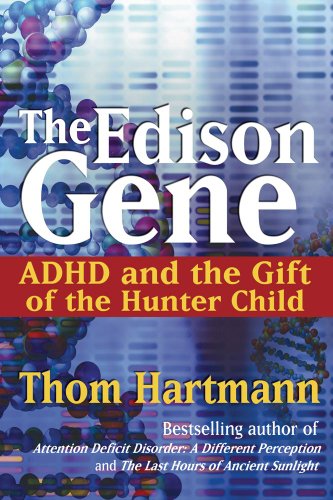
Have you ever felt fundamentally different from those around you? Do you struggle in conventional settings yet find yourself thriving in high-pressure, fast-paced environments? Are your relationships challenged by the fact that you see the world through a distinctly different lens than your partner, family members, or friends? If so, you may possess what many have come to recognize as an evolutionary advantage disguised as a disability or character flaw.
This exploration reveals a revolutionary perspective on how the human brain works and how certain neurological patterns, long labeled as disorders or deficiencies, actually represent a distinct way of processing information and engaging with the world. Rather than viewing these differences as problems to be fixed, readers will discover how to recognize, appreciate, and harness these natural gifts for personal fulfillment and enhanced relationships.
The premise at the heart of this investigation challenges decades of conventional thinking. What if the restlessness, creative energy, and unconventional thinking patterns that have caused you difficulty in school or traditional employment are actually remnants of traits that made your ancestors exceptional hunters, explorers, and innovators? What if the very qualities that frustrate your loved ones in intimate relationships are the same characteristics that drive visionary thinking and dynamic action?
Throughout these pages, you'll encounter compelling historical and anthropological evidence suggesting that certain neurological wiring patterns have been present throughout human evolution. Rather than emerging as a modern epidemic, these traits may represent a consistent percentage of the human population, individuals whose brains are wired for novelty-seeking, rapid information processing, and intuitive pattern recognition. In traditional agricultural and industrial societies, these individuals often faced marginalization because their strengths didn't align with the requirements of repetitive, structured work. Yet in our rapidly changing modern world, their abilities become increasingly valuable.
For those in relationships, this material offers profound insights into why communication breakdowns occur and how partners with different neurological patterns can develop genuine understanding and appreciation for one another. Partners often misinterpret differences as personal rejection or incompetence rather than recognizing them as fundamentally different operating systems. A partner who appears impulsive, disorganized, or emotionally reactive may simply be experiencing the world through a faster, more stimulus-responsive nervous system. Understanding this distinction transforms frustration into compassion and opens pathways for more authentic connection.
The content explores practical strategies for working with your natural neurology rather than fighting against it. Readers will discover how to structure their environments, relationships, and life choices in ways that support their particular way of processing information. You'll learn how to communicate your needs more effectively with partners and family members who may not share your neurological makeup. Furthermore, you'll explore how to recognize and develop the genuine strengths inherent in your particular way of being.
Perhaps most importantly, this material addresses the relational impact of years spent feeling broken or defective. Many readers will experience profound relief in recognizing that their lifelong sense of difference isn't a personal failing but rather a different expression of human neurology. This reframe alone can be transformative for self-esteem and for one's capacity to show up authentically in relationships.
The insights contained here serve those seeking to understand themselves more deeply and those hoping to understand the people they love. By honoring neurodiversity as a natural variation in human consciousness rather than pathology, readers can move toward genuine self-acceptance and build relationships based on authentic understanding rather than judgment or attempted conformity.