Most of us believe that exercise happens in a gym, during a designated time slot, wearing special clothes. We've been conditioned to think that if we don't break a sweat or feel our hearts pounding, we're not really exercising. But what if everything we think we know about movement is incomplete? What if the real key to health, vitality, and longevity isn't about intense workouts at all, but something far more fundamental and accessible?
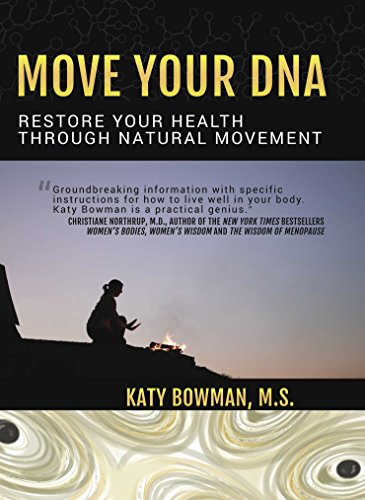
This groundbreaking exploration challenges the modern fitness paradigm and invites readers to reconsider their entire relationship with how their bodies move through space. The central premise is both simple and revolutionary: we are suffering from a widespread deficiency of varied, natural movement. Just as vitamin deficiencies cause disease, a movement deficiency creates dysfunction in our bodies, contributing to chronic pain, poor posture, weight gain, and countless other health issues that we've come to accept as normal parts of aging.
The framework presented here draws on biomechanics, anthropology, and evolutionary biology to reveal how our sedentary modern lifestyle has fundamentally disconnected us from the movement patterns our bodies evolved to perform. Unlike the fitness industry, which promises transformation through intense exercise, this approach suggests that we simply need to restore the diversity of movement that characterized human existence before we became desk-bound, car-dependent creatures. The message is profoundly empowering because it suggests that genuine change doesn't require expensive gym memberships, special equipment, or hours of grueling workouts.
Readers will discover how the human body is designed to move in countless ways: squatting, climbing, walking on varied terrain, carrying, crawling, and balancing. Our ancestors performed these movements naturally throughout their days, maintaining strength, flexibility, and resilience without ever thinking about "exercise." Modern life has systematically eliminated these movement patterns from our routines. We sit in chairs, drive in cars, take elevators, and spend hours in positions that our bodies were never meant to maintain. This isn't laziness or weakness on our part—it's the inevitable result of an environment engineered to minimize movement variation.
The practical wisdom contained here goes far beyond simple fitness tips. It offers a complete paradigm shift in how to think about inhabiting your body. Rather than viewing movement as something you schedule and complete, you'll learn to see movement as the constant, varied, and integrated experience it should be. This might mean standing differently while brushing your teeth, changing how you sit, incorporating more walking into daily life, or rethinking your relationship with stairs and uneven surfaces.
What makes this exploration particularly valuable for readers interested in personal empowerment is its liberation from the guilt and shame that often accompanies conventional fitness culture. There's no judgment here, no sense that you're failing because you don't look like a fitness model or can't maintain an intense exercise regimen. Instead, there's an invitation to become attuned to your body's actual needs and to make small, sustainable changes that honor how humans are genuinely designed to move.
The health implications are staggering. Chronic pain, obesity, metabolic dysfunction, and numerous other modern ailments may be less about individual failure and more about living in environments that fundamentally contradict our evolutionary design. By restoring varied movement to daily life, readers have the potential to dramatically improve their health outcomes without pharmaceutical interventions or extreme measures.
This is ultimately a book about reclaiming your birthright as a human being. It's about remembering that your body possesses inherent wisdom and that the solution to many modern health problems may be simpler, more natural, and more joyful than we've been led to believe. The path to transformation lies not in more discipline, but in more presence, more awareness, and more movement—the kind of movement that feels natural because it is.