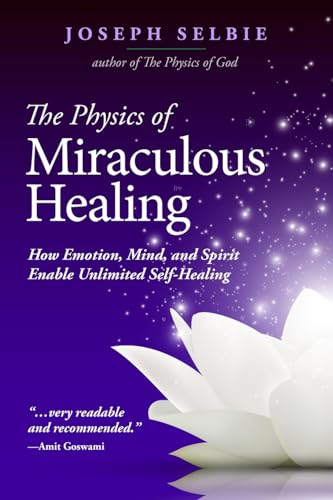
Imagine standing at the intersection of cutting-edge quantum physics and ancient spiritual wisdom, where science begins to explain what mystics have known for centuries: that consciousness itself may be the most powerful healing force in the universe. This groundbreaking exploration bridges the seemingly unbridgeable gap between the material world we can measure and the invisible dimensions of human experience where transformation occurs.
Readers will discover how the fundamental laws governing our physical reality might actually support the occurrence of miraculous healing rather than contradict it. Through carefully reasoned arguments grounded in legitimate scientific research, this work presents a coherent framework for understanding how healing can transcend the limitations we normally accept as inevitable. The journey begins with an examination of quantum mechanics and how observation itself affects reality at the subatomic level, then expands outward to encompass the role of consciousness in biological processes.
The exploration reveals that modern physics has already opened doors that conventional medicine has been reluctant to walk through. When physicists discovered that particles exist in multiple states simultaneously until observed, they inadvertently created a scientific basis for understanding how focused intention and belief might influence physical outcomes. This isn't mysticism dressed in scientific language; rather, it's a genuine attempt to reconcile what we know about the universe with phenomena that occur regularly but remain unexplained by mechanistic models of medicine.
Throughout these pages, readers encounter the concept of consciousness as a fundamental force, not merely an emergent property of brain chemistry. This perspective transforms how we understand the mind-body connection from a vague metaphorical relationship into something concrete and potentially measurable. The implications are profound: if consciousness plays a foundational role in determining physical outcomes, then the attitudes, beliefs, and intentions we cultivate become far more than psychological comfort—they become active participants in our healing process.
The text explores how individual cases of remarkable recovery often share common elements: a shift in perspective, a strengthening of faith or conviction, and a fundamental change in how people relate to their own bodies and their future. Rather than dismissing these as anomalies or coincidences, this framework suggests they represent the natural operation of principles embedded in the fabric of reality itself. When enough people experience similar phenomena, when patterns emerge consistently enough, the question becomes not whether miraculous healing is real but rather how our current models have failed to account for it.
Readers will gain practical understanding of how consciousness, energy, and biology interact in ways that support healing. This includes exploring research on placebo effects, prayer studies, meditation's impact on physiology, and documented cases where individuals recovered from conditions medicine deemed incurable. Each example serves not as magical thinking but as evidence pointing toward mechanisms we're only beginning to understand.
The significance of this exploration extends beyond individual healing. Comprehending these principles offers hope to those facing health challenges that conventional approaches haven't resolved. It validates experiences that mainstream medicine often dismisses and empowers individuals to take active roles in their own recovery. Moreover, it suggests that our current understanding of medicine's possibilities remains incomplete and that the human body possesses capabilities for self-repair far exceeding what we typically recognize.
For seekers of genuine transformation and healing, this work offers something increasingly rare: a serious, intellectually rigorous examination of how the deepest principles of physics might actually support our highest aspirations for wholeness and recovery. It invites readers to reconsider what's possible and to recognize that the boundary between the miraculous and the scientific may be far more permeable than we've been led to believe.