
# Understanding the Dimensions of Human Consciousness and Personal Transformation
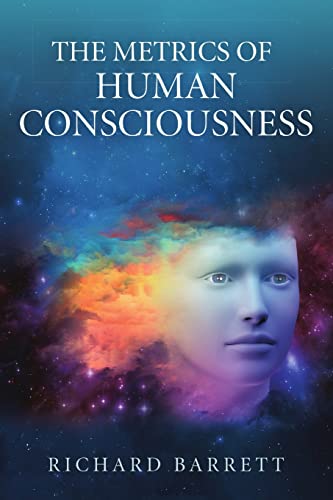
Consciousness has long remained one of humanity's greatest mysteries. What drives our choices? Why do some people experience profound fulfillment while others struggle with emptiness despite material success? How can we measure growth that transcends the purely physical or material realm? These fundamental questions lie at the heart of an exploration into the measurable aspects of human consciousness itself.
This work presents a groundbreaking framework for understanding consciousness as something that can actually be measured, tracked, and developed. Rather than treating consciousness as an abstract, intangible concept accessible only through mystical experience or philosophical debate, the material demonstrates how consciousness operates at distinct levels, each with observable characteristics and measurable indicators. This revolutionary approach bridges the gap between spirituality and science, offering readers a practical methodology for assessing their own conscious development and understanding where they stand on the spectrum of human awareness.
The core insight underlying this exploration is that consciousness is not simply present or absent, high or low, but rather exists in layers and dimensions that can be systematically evaluated. Different stages of conscious development correspond to different ways of perceiving reality, making decisions, relating to others, and finding meaning. By identifying these stages and understanding their characteristics, individuals gain remarkable clarity about their current position and the specific pathways available for growth.
One of the most valuable aspects of this material is its integration of personal development with collective consciousness. The framework addresses not only individual spiritual growth but also how consciousness operates within organizations, communities, and societies. This dual focus recognizes that our personal transformation is intimately connected to the consciousness of the systems we inhabit. As we evolve individually, we contribute to collective evolution, and conversely, working to raise collective consciousness creates a supportive environment for individual growth.
The practical applications are extensive. Readers discover how to identify their current stage of consciousness development, recognize limiting beliefs that constrain their awareness, and consciously move toward higher levels of consciousness. The material provides specific indicators and characteristics of different consciousness levels, making self-assessment possible without requiring external validation or professional diagnosis. This empowerment is crucial for those genuinely committed to personal transformation.
Understanding these metrics also illuminates why certain approaches to personal growth work for some people but not others. Different consciousness levels respond to different methods and motivations. What inspires profound change at one level of consciousness may prove ineffective or even counterproductive at another level. By understanding where you stand, you can select strategies, practices, and teachings that genuinely align with your current capacity and needs.
The exploration extends to examining how consciousness relates to values, purpose, and meaning-making. Higher levels of consciousness are characterized by expanded awareness, greater capacity for compassion, enhanced ability to see interconnection, and stronger alignment between actions and deeper values. These are not merely nice spiritual ideals but represent actual, observable shifts in how people experience and engage with life.
This material matters profoundly for anyone sensing there is more to life than what conventional thinking offers. For spiritual seekers, it provides structure and clarity to their journey. For those struggling with personal challenges, it offers understanding that transcends blame or shame, revealing instead the developmental nature of consciousness itself. For leaders and change-makers, it provides insight into the consciousness levels of organizations and populations, enabling more effective approaches to creating positive change.
The framework presented here respects both the scientific impulse to measure and understand systematically, and the spiritual recognition that consciousness is the fundamental reality of existence. This integration creates something genuinely useful for contemporary seekers: a map of consciousness that is neither purely mystical nor reductively materialistic, but practically applicable to real lives seeking real transformation.