
Happiness & Success
Achieving Happiness Through Acceptance of Life
The quest for happiness often leads to frustration, as many fail to realize that the...








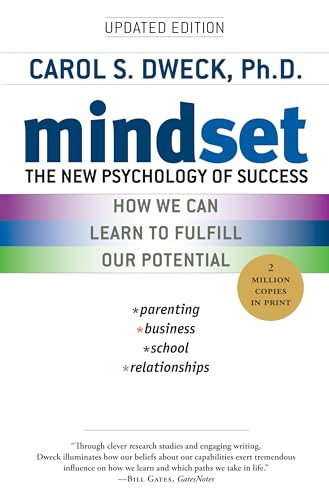
At the heart of human potential lies a powerful psychological framework that determines whether we shrink from challenges or embrace them, whether we see failure as a permanent verdict or a springboard for growth, and whether we believe our abilities are carved in stone or capable of remarkable development. This groundbreaking work reveals how our beliefs about our own capabilities profoundly shape every aspect of our lives, from academic and professional achievement to relationships, parenting, and personal fulfillment.
The central revelation explores two fundamentally different ways of viewing intelligence, talent, and ability. The fixed perspective assumes that our qualities are predetermined and unchangeable—we're either smart or we're not, talented or talentless, capable or incapable. People operating from this viewpoint often feel the need to prove themselves repeatedly, seeing every situation as a test of their inherent worth. They may avoid challenges that could expose their limitations, give up easily when faced with obstacles, feel threatened by others' success, and view effort as a sign of inadequacy rather than a path to mastery.
In contrast, the growth-oriented perspective embraces the understanding that basic qualities can be cultivated through dedication and hard work. Intelligence and talent become starting points rather than fixed destinations. This approach creates a passion for learning and a resilience essential for significant accomplishment. Those who adopt this view understand that even geniuses require tremendous effort to develop their gifts, and they see challenges as opportunities to stretch themselves rather than as threats to their ego.
Read more ▼
The psychology of music : a very short introduction
Elizabeth Hellmuth Margulis
Bernard Beitman
The Magical Mind (The Teachings of Imre Vallyon)
Imre Vallyon
Jan Frazier
The quest for happiness often leads to frustration, as many fail to realize that the...

Reaching sixty can evoke complex emotions, blending relief with ongoing ambition. This...

The quest for life's purpose often leads to unsatisfactory answers. This article...

Romantic love is a complex emotion shaped by historical, cultural, and biological...

Imagine going through one of the most physically and emotionally demanding experiences...

Daily actions often conflict with personal beliefs due to past experiences. By utilizing...

Have you ever argued over something that wasn't actually said? From cultural differences...

Therapists often use dream interpretation to delve into patients' emotions, but true...