

Happiness & Success
Achieving Happiness Through Acceptance of Life
The quest for happiness often leads to frustration, as many fail to realize that the...








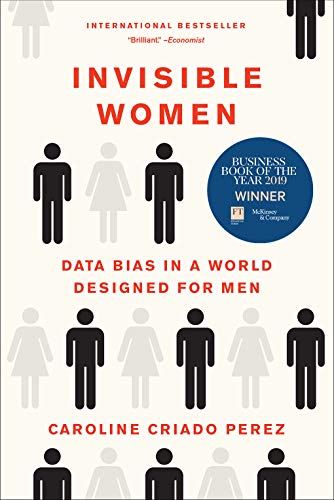
The world has been designed primarily by and for men, creating a reality where half the population—women—find themselves systematically overlooked, underserved, and sometimes endangered by the very systems meant to serve everyone equally. This groundbreaking investigation into gender data bias reveals how the absence of women's perspectives and experiences in data collection has created a pervasive gap that affects everything from medical research to urban planning, from workplace safety to smartphone design.
Drawing on hundreds of studies from across the globe, this extensively researched work exposes how the default human being in most research, policy-making, and design has historically been male. The implications of this oversight are profound and far-reaching, affecting women's health, safety, economic opportunities, and daily quality of life in ways most people have never considered. When crash test dummies are designed based on the average male body, women are significantly more likely to be injured in car accidents. When medical research primarily studies male subjects, women receive misdiagnoses and ineffective treatments. When voice recognition software is trained predominantly on male voices, it fails to accurately understand women's speech.
Readers will discover how this data gap manifests in surprising and often shocking ways across virtually every aspect of modern life. The exploration spans from the ancient world to present day, demonstrating that this invisibility is not new but rather a continuation of historical patterns that have consistently rendered women's experiences secondary or irrelevant. From snow-clearing schedules that prioritize routes used more frequently by men to office temperatures calibrated for male metabolism, the examples accumulate into an undeniable pattern of systemic oversight.
Read more ▼
Paul Levy

Inquiry Cards: 48-card Deck, Guidebook and Stand
Jim Hayes (artist) and Sylvia Nibley (author).

The art of focused conversation
Brian Stanfield
The quest for happiness often leads to frustration, as many fail to realize that the...

Reaching sixty can evoke complex emotions, blending relief with ongoing ambition. This...

The quest for life's purpose often leads to unsatisfactory answers. This article...

Romantic love is a complex emotion shaped by historical, cultural, and biological...

Imagine going through one of the most physically and emotionally demanding experiences...

Daily actions often conflict with personal beliefs due to past experiences. By utilizing...

Have you ever argued over something that wasn't actually said? From cultural differences...

Therapists often use dream interpretation to delve into patients' emotions, but true...