
Happiness & Success
Achieving Happiness Through Acceptance of Life
The quest for happiness often leads to frustration, as many fail to realize that the...









Challenging accepted narratives and developing critical thinking skills represents one of the most powerful forms of personal empowerment available in our modern world. This groundbreaking work invites readers on a controversial journey that questions one of humanity's most celebrated achievements: the Apollo moon landings of the late 1960s and early 1970s. By examining photographic evidence, technical specifications, radiation concerns, and historical context, readers are encouraged to develop their own analytical frameworks for evaluating official accounts and mainstream narratives.
At its core, this exploration serves as a masterclass in independent thinking and personal sovereignty. Rather than accepting information at face value, readers learn to examine evidence critically, question authority, and trust their own judgment. The investigation delves into numerous technical inconsistencies, including photographic anomalies such as shadows falling at impossible angles, the absence of stars in space photographs, and the pristine condition of equipment that supposedly endured harsh lunar conditions. These observations become starting points for readers to practice discernment and develop confidence in their ability to analyze complex information independently.
The examination extends beyond mere technical analysis into broader questions about institutional trust, media manipulation, and the relationship between government and citizens. Readers discover how propaganda techniques work, how narratives become accepted as truth through repetition, and why questioning official stories often meets with ridicule and resistance. This understanding proves transformative for those seeking to reclaim their personal power and mental autonomy in an age of information overload and manufactured consent.
Read more ▼
Mantak Chia

From Death To Life: The Incredible True Story of Anthony Joseph
Terri-Ann Russell
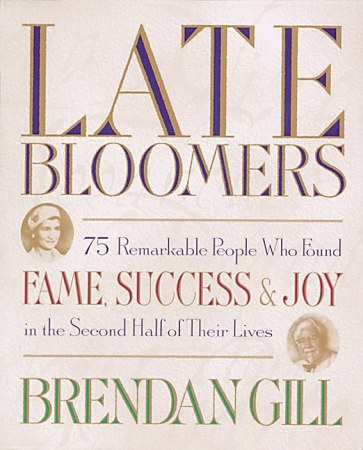
Brendan Gill

Bronnie Ware
The quest for happiness often leads to frustration, as many fail to realize that the...

Reaching sixty can evoke complex emotions, blending relief with ongoing ambition. This...

The quest for life's purpose often leads to unsatisfactory answers. This article...

Romantic love is a complex emotion shaped by historical, cultural, and biological...

Imagine going through one of the most physically and emotionally demanding experiences...

Have you ever argued over something that wasn't actually said? From cultural differences...

Daily actions often conflict with personal beliefs due to past experiences. By utilizing...

Therapists often use dream interpretation to delve into patients' emotions, but true...