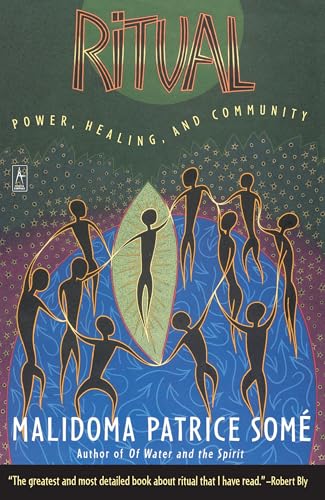

Deep within the heart of traditional African culture lies a profound understanding of ritual that modern Western society has largely forgotten. Through the lens of the Dagara people of West Africa, readers are invited into a worldview where ritual serves as the fundamental technology for maintaining balance between the visible and invisible worlds, between the human community and the realm of spirit.
This exploration reveals how indigenous wisdom understands ritual not as empty ceremonial gesture, but as essential spiritual technology that addresses the soul's deepest needs. The Dagara perspective demonstrates that ritual creates a portal between ordinary reality and the sacred dimensions of existence, allowing communities to heal trauma, mark life transitions, maintain cosmic order, and restore individuals to wholeness when they have strayed from their purpose.
What makes this work particularly powerful is its bridging of two radically different worldviews. Drawing on personal experience of living between traditional African village life and contemporary Western culture, the narrative illuminates how indigenous peoples maintain practices that directly address spiritual hunger, community fragmentation, and disconnection from nature that plague modern society. Readers discover that the absence of meaningful ritual in contemporary life leaves people spiritually starved, unable to properly grieve losses, celebrate transitions, or find their authentic place in the web of community and cosmos.
The work explores five fundamental types of ritual that correspond to the five elements in Dagara cosmology: water rituals for reconciliation and healing; fire rituals for transformation and empowerment; earth rituals for nurturing and fertility; mineral rituals for remembering and connection to ancestors; and nature rituals for establishing right relationship with the living world. Each element addresses specific human needs that cannot be met through psychological or material means alone.
Readers gain practical understanding of how ritual functions as a container for spiritual energy, how intention and community participation amplify its effectiveness, and why authentic ritual must emerge from genuine need rather than intellectual curiosity. The distinction between ritual as spiritual technology versus religious dogma becomes crystal clear, offering liberation for those who feel constrained by traditional religious structures yet long for authentic spiritual practice.
Perhaps most compelling is the revelation of how indigenous cultures understand mental illness, addiction, and social dysfunction as spiritual crises requiring ritual intervention rather than purely medical or psychological treatment. This perspective challenges readers to reconsider fundamental assumptions about healing, offering hope that some of the most intractable problems facing individuals and communities might have solutions in ancient wisdom that predates modern therapeutic models.
The narrative also addresses the controversial question of whether Westerners can appropriately engage with indigenous ritual practices. Rather than offering simplistic permission or prohibition, it presents a nuanced framework for understanding when cross-cultural spiritual exchange honors tradition versus when it becomes extractive appropriation. The emphasis falls on understanding the underlying principles and purposes of ritual so that authentic practices can emerge organically from one's own community needs rather than simply copying external forms.
Throughout, readers encounter stories that illuminate how ritual operates in living practice: funerals that last days and genuinely allow grief to move through the community; initiations that transform youth into responsible adults; divinations that reveal spiritual causes of physical ailments; and reconciliation ceremonies that restore social harmony after conflict. These examples demonstrate ritual's power to address real human needs in tangible ways.
For those seeking to reclaim ritual in their own lives, the work provides foundational principles: the necessity of community participation, the importance of creating sacred space, the role of elders and wisdom keepers, and the need for ritual to serve genuine spiritual purpose rather than ego gratification. It becomes clear that effective ritual cannot be performed alone or casually, but requires commitment, preparation, and often the guidance of those who understand how to safely navigate between worlds.
This exploration ultimately offers a vision of human life embedded in spiritual reality, where ritual serves as the bridge maintaining proper relationship between all dimensions of existence. For readers exhausted by the spiritual bankruptcy of purely materialistic culture, it opens doorways to recovering the sacred technology humanity has employed for millennia to live in balance, meaning, and authentic connection with the cosmos.
Read more ▼