
Happiness & Success
Achieving Happiness Through Acceptance of Life
The quest for happiness often leads to frustration, as many fail to realize that the...









For centuries, Native American peoples have maintained profound spiritual traditions and ways of understanding our relationship to the earth, to each other, and to the sacred dimensions of existence. This carefully curated collection brings together the essential teachings, speeches, and wisdom passages from some of the most revered voices in Native American history, offering contemporary readers a window into a worldview that stands in striking contrast to the dominant culture's values of acquisition, individual achievement, and separation from nature.
At the heart of these teachings lies a fundamentally different understanding of what it means to be human. Rather than viewing ourselves as separate from or superior to the natural world, these traditions illuminate a path of deep interconnection and reciprocity. Every element of creation holds intelligence and purpose. Animals are teachers and relatives. The earth is not a resource to be exploited but a mother to be honored and protected. Time moves in cycles rather than linear progressions. And the measure of a good life is not what one accumulates but what one gives away and the legacy left for future generations.
Through carefully selected passages spanning several centuries, readers encounter the voices of legendary leaders and spiritual teachers who articulated these principles with eloquence and moral clarity. Their words address the European newcomers and their descendants, speaking truths about land stewardship, community responsibility, spiritual practice, and human dignity that remain urgently relevant today. These are not quaint historical artifacts but living wisdom that challenges many of the assumptions underlying modern life.
Read more ▼
Rodney Habib, Karen Shaw Becker

Sophie Rose
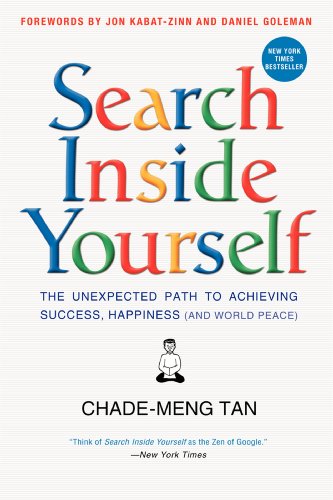
Chade-Meng Tan

Nyoiti Sakurazawa
The quest for happiness often leads to frustration, as many fail to realize that the...

Reaching sixty can evoke complex emotions, blending relief with ongoing ambition. This...

The quest for life's purpose often leads to unsatisfactory answers. This article...

Romantic love is a complex emotion shaped by historical, cultural, and biological...

Imagine going through one of the most physically and emotionally demanding experiences...

Have you ever argued over something that wasn't actually said? From cultural differences...

Daily actions often conflict with personal beliefs due to past experiences. By utilizing...

Therapists often use dream interpretation to delve into patients' emotions, but true...