



Happiness & Success
Achieving Happiness Through Acceptance of Life
The quest for happiness often leads to frustration, as many fail to realize that the...








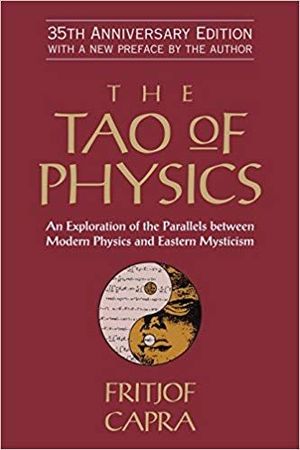
Modern physics has revealed a universe far stranger and more mysterious than our everyday perceptions suggest. At the subatomic level, particles appear and disappear, exist in multiple states simultaneously, and seem to communicate instantaneously across vast distances. Meanwhile, ancient Eastern philosophies have long described reality in remarkably similar terms—as a dynamic web of interconnected events, where the observer and observed are fundamentally inseparable, and where the solid world of matter dissolves into patterns of energy and consciousness.
This groundbreaking exploration bridges two seemingly disparate worldviews, demonstrating that the revolutionary discoveries of twentieth-century physics bear striking parallels to the insights of Hindu, Buddhist, Chinese, and Japanese mystical traditions. Through accessible language and compelling examples, readers discover how quantum mechanics, relativity theory, and particle physics echo the profound wisdom found in texts like the Tao Te Ching, the Upanishads, and Buddhist sutras.
The journey begins with an examination of classical physics and its mechanistic worldview—a perspective that dominated Western thought for centuries and still shapes how many people understand reality, success, and achievement. However, the quantum revolution shattered this mechanical universe, revealing instead a cosmos where everything interpenetrates everything else, where rigid boundaries dissolve, and where the act of observation fundamentally affects what is observed. These insights carry profound implications not just for science, but for how we approach work, career development, and our relationship with material success.
Read more ▼
The quest for happiness often leads to frustration, as many fail to realize that the...

Reaching sixty can evoke complex emotions, blending relief with ongoing ambition. This...

The quest for life's purpose often leads to unsatisfactory answers. This article...

Romantic love is a complex emotion shaped by historical, cultural, and biological...

Imagine going through one of the most physically and emotionally demanding experiences...

Daily actions often conflict with personal beliefs due to past experiences. By utilizing...

Have you ever argued over something that wasn't actually said? From cultural differences...

Therapists often use dream interpretation to delve into patients' emotions, but true...