
Happiness & Success
Achieving Happiness Through Acceptance of Life
The quest for happiness often leads to frustration, as many fail to realize that the...









Imagine your brain not as a passive receiver of information from the world, but as a tireless prediction machine, constantly generating expectations about what will happen next and updating its models when reality surprises it. This revolutionary perspective on human consciousness and perception challenges everything we thought we knew about how our minds work and offers profound implications for personal transformation, mental health, and our understanding of what it means to be human.
At the heart of this work lies a compelling theory called predictive processing, which suggests that our brains are fundamentally prediction engines. Rather than simply absorbing sensory data from our environment, our minds are continuously generating hypotheses about what's out there, testing these predictions against incoming information, and adjusting accordingly. When predictions match reality, our brain can operate efficiently with minimal energy expenditure. When predictions fail, the resulting "prediction error" signals force an update to our internal models. This elegant framework explains not just perception, but action, emotion, and even aspects of consciousness itself.
For readers interested in personal growth and transformation, this perspective offers remarkable insights. Consider how many of our habitual patterns, emotional reactions, and limiting beliefs stem from deeply ingrained predictions our brains have learned over years or decades. Understanding that we are prediction machines helps explain why change can feel so difficult—our brains have become expertly tuned to expect certain outcomes based on past experience. Yet this same understanding also illuminates pathways for transformation. By recognizing that our experience is shaped by predictions, we gain leverage to consciously reshape those predictions through new experiences, mindfulness practices, and intentional action.
Read more ▼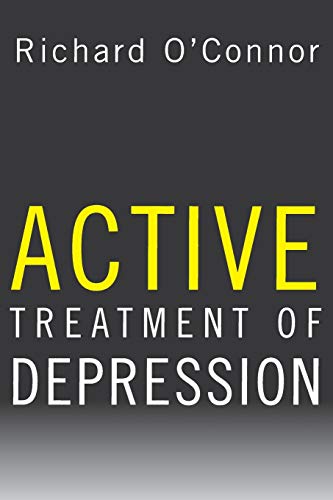
Active Treatment of Depression
O'Connor, Richard Ph. D.

Alan Watts

Breaking the habit of being yourself
Joe Dispenza

Eric Maisel
The quest for happiness often leads to frustration, as many fail to realize that the...

Reaching sixty can evoke complex emotions, blending relief with ongoing ambition. This...

The quest for life's purpose often leads to unsatisfactory answers. This article...

Romantic love is a complex emotion shaped by historical, cultural, and biological...

Imagine going through one of the most physically and emotionally demanding experiences...

Daily actions often conflict with personal beliefs due to past experiences. By utilizing...

Have you ever argued over something that wasn't actually said? From cultural differences...

Therapists often use dream interpretation to delve into patients' emotions, but true...