
Happiness & Success
Achieving Happiness Through Acceptance of Life
The quest for happiness often leads to frustration, as many fail to realize that the...









Consciousness remains one of the most profound mysteries we encounter in our daily lives. Despite remarkable advances in neuroscience and psychology, the question of why we have subjective experiences—why there is something it feels like to see red, to taste chocolate, or to feel joy—continues to elude simple explanation. This groundbreaking exploration tackles this fundamental puzzle head-on, offering readers a transformative journey into understanding the very nature of awareness itself.
At the heart of this investigation lies what philosophers call "the hard problem of consciousness." While science has made tremendous progress in explaining the physical mechanisms of the brain—how neurons fire, how information is processed, how we respond to stimuli—none of these explanations adequately address why these physical processes are accompanied by inner experience. Why doesn't all this biological machinery simply operate in the dark, without the light of consciousness illuminating it from within? This work presents a compelling argument that consciousness cannot be fully explained by physical processes alone, introducing readers to a revolutionary framework for thinking about mind and reality.
The exploration begins by carefully distinguishing between different aspects of mental life. Some mental functions, like learning, memory, and behavioral control, are relatively straightforward to explain in physical terms. These are matters of information processing and can, in principle, be understood through neuroscience and cognitive psychology. However, subjective experience—what philosophers call "qualia"—presents an entirely different challenge. The redness of red, the painfulness of pain, the emotional texture of sadness—these phenomenal qualities seem to exist in a category all their own.
Read more ▼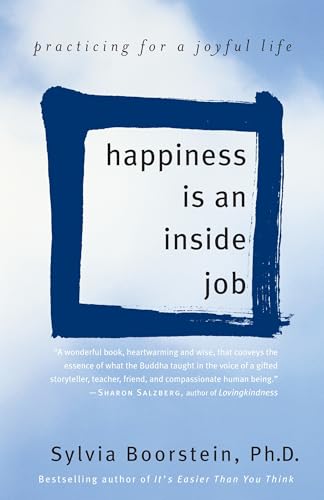
Sylvia Boorstein

Johannes Wilbert
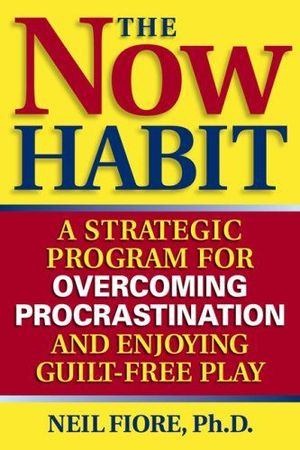
Neil Fiore

Pat Hutchins
The quest for happiness often leads to frustration, as many fail to realize that the...

Reaching sixty can evoke complex emotions, blending relief with ongoing ambition. This...

The quest for life's purpose often leads to unsatisfactory answers. This article...

Romantic love is a complex emotion shaped by historical, cultural, and biological...

Imagine going through one of the most physically and emotionally demanding experiences...

Daily actions often conflict with personal beliefs due to past experiences. By utilizing...

Have you ever argued over something that wasn't actually said? From cultural differences...

Therapists often use dream interpretation to delve into patients' emotions, but true...