
Happiness & Success
Achieving Happiness Through Acceptance of Life
The quest for happiness often leads to frustration, as many fail to realize that the...








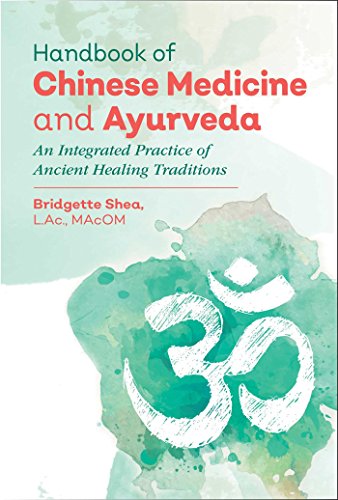
For thousands of years, two of the world's most sophisticated healing traditions have developed independently on opposite sides of Asia, each offering profound insights into the nature of health, disease, and the human body's innate capacity for balance and restoration. What emerges when these two ancient wisdom traditions are brought together is nothing short of remarkable: a comprehensive understanding of healing that honors both the unique gifts of each system and the universal principles that unite them.
At the heart of both Traditional Chinese Medicine and Ayurveda lies a fundamental recognition that health is not merely the absence of disease, but rather a dynamic state of balance between opposing yet complementary forces. Both systems view the human body as a microcosm of the natural world, subject to the same elemental forces and energetic patterns that govern all of life. This perspective offers a radical departure from conventional Western medicine's tendency to fragment the body into isolated systems and symptoms.
Readers embarking on this integrative journey will discover how Chinese Medicine's concepts of Yin and Yang, Qi, and the Five Elements correspond with Ayurveda's understanding of the three doshas: Vata, Pitta, and Kapha. These correlations are not superficial similarities but represent deep structural parallels in how both traditions understand constitutional types, the progression of disease, and the restoration of health. By learning to recognize these patterns in themselves and others, readers gain practical tools for personalized health maintenance that go far beyond one-size-fits-all approaches.
Read more ▼
The miracle of regenerative medicine
Elisa Lottor
Healing the Thyroid with Ayurveda
Marianne Teitelbaum, Anjali Grover
Jeanne Rose
Peter Ralston
The quest for happiness often leads to frustration, as many fail to realize that the...

Reaching sixty can evoke complex emotions, blending relief with ongoing ambition. This...

The quest for life's purpose often leads to unsatisfactory answers. This article...

Romantic love is a complex emotion shaped by historical, cultural, and biological...

Imagine going through one of the most physically and emotionally demanding experiences...

Daily actions often conflict with personal beliefs due to past experiences. By utilizing...

Have you ever argued over something that wasn't actually said? From cultural differences...

Therapists often use dream interpretation to delve into patients' emotions, but true...