
Happiness & Success
Achieving Happiness Through Acceptance of Life
The quest for happiness often leads to frustration, as many fail to realize that the...








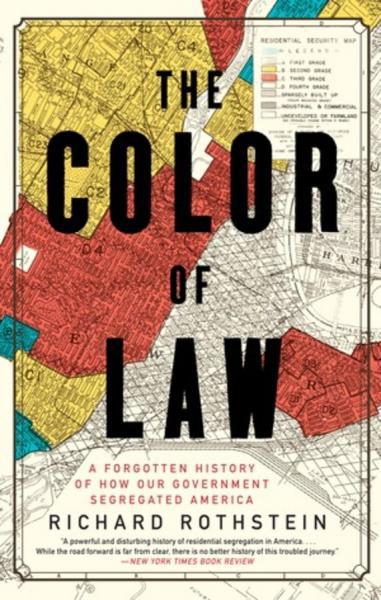
Americans have long been taught that racial segregation in housing emerged from individual choices, private prejudices, and the invisible hand of the market. We've accepted a narrative suggesting that people naturally chose to live among their own racial groups, that discriminatory lending practices were simply the decisions of private banks, and that the stark dividing lines between white suburbs and communities of color arose organically. This deeply researched work dismantles that comfortable myth entirely, revealing instead a meticulously documented history of deliberate governmental action at federal, state, and local levels that systematically segregated American cities and suburbs throughout the twentieth century.
Through painstaking examination of laws, policies, regulations, and governmental practices, readers discover how public housing projects were intentionally segregated by race, how the Federal Housing Administration refused to insure mortgages in or near African American neighborhoods while subsidizing white suburban developments that explicitly excluded people of color, and how local governments used zoning laws, eminent domain, and urban renewal programs to enforce and deepen racial separation. The evidence presented transforms our understanding of responsibility, moving segregation from the realm of private discrimination into the clear domain of unconstitutional state action.
What makes this exploration particularly powerful for those on a journey of social consciousness is the way it connects historical policies to present-day inequalities. The wealth gap between white and Black Americans, the educational disparities resulting from property-tax-funded schools, the health outcomes correlated with neighborhood environments—all trace directly back to government-sponsored segregation that prevented African Americans from buying homes in appreciating neighborhoods while white families built generational wealth through federally subsidized homeownership. Understanding these connections opens pathways to genuine healing and transformation, both personal and societal.
Read more ▼
Margaret Wolff
Suzanne Mettler
Matthew Desmond
T. M. Scanlon
The quest for happiness often leads to frustration, as many fail to realize that the...

Reaching sixty can evoke complex emotions, blending relief with ongoing ambition. This...

The quest for life's purpose often leads to unsatisfactory answers. This article...

Romantic love is a complex emotion shaped by historical, cultural, and biological...

Imagine going through one of the most physically and emotionally demanding experiences...

Daily actions often conflict with personal beliefs due to past experiences. By utilizing...

Have you ever argued over something that wasn't actually said? From cultural differences...

Therapists often use dream interpretation to delve into patients' emotions, but true...