
Happiness & Success
Achieving Happiness Through Acceptance of Life
The quest for happiness often leads to frustration, as many fail to realize that the...








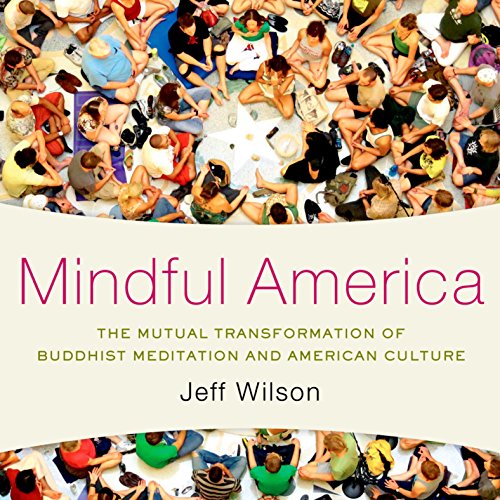
Mindfulness has become a cultural phenomenon in America, transforming from an ancient Buddhist meditation practice into a mainstream movement embraced by corporations, schools, hospitals, and millions of individuals seeking stress relief and personal transformation. But how did this happen? What does it mean when a religious practice becomes secularized and commercialized? And what are we really doing when we practice mindfulness in its modern American form?
This fascinating exploration takes readers on a journey through the unexpected history and cultural evolution of mindfulness in the United States. Drawing on extensive research and interviews, the narrative reveals how a contemplative practice rooted in 2,500-year-old Buddhist traditions was gradually stripped of its religious context and repackaged as a scientifically validated therapeutic technique for modern life. The transformation is both remarkable and revealing, offering insights into American culture, spirituality, and our collective search for meaning in an increasingly hectic world.
Readers will discover the key figures and pivotal moments that shaped mindfulness as we know it today. From the countercultural movements of the 1960s and 1970s, when Buddhist teachers first began attracting Western students, to the medicalization of mindfulness through groundbreaking programs at major medical centers, the story unfolds as a fascinating case study in religious adaptation and cultural appropriation. The narrative examines how mindfulness became divorced from its Buddhist roots and ethical framework, reimagined as a stress-reduction tool that could fit comfortably within secular institutions without raising concerns about religious proselytizing.
Read more ▼
Helen Caldicott

Thomas Mary Berry
David D. Burns
Martin Elias Pete Seligman
The quest for happiness often leads to frustration, as many fail to realize that the...

Reaching sixty can evoke complex emotions, blending relief with ongoing ambition. This...

The quest for life's purpose often leads to unsatisfactory answers. This article...

Romantic love is a complex emotion shaped by historical, cultural, and biological...

Imagine going through one of the most physically and emotionally demanding experiences...

Daily actions often conflict with personal beliefs due to past experiences. By utilizing...

Have you ever argued over something that wasn't actually said? From cultural differences...

Therapists often use dream interpretation to delve into patients' emotions, but true...