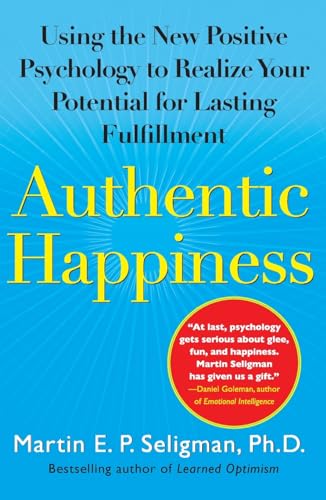
For decades, psychology has focused primarily on what's wrong with us—our disorders, our traumas, our mental illnesses. But what if we approached human potential from the opposite direction? What if instead of simply treating depression and anxiety, we asked the fundamental question: What makes life genuinely worth living? This pioneering exploration into the science of human flourishing offers a transformative framework for understanding authentic wellbeing that extends far beyond the absence of psychological distress.
The central premise challenges a widespread assumption that happiness is largely determined by our genes and circumstances. Through rigorous scientific research, the work presents compelling evidence that we possess far greater agency over our happiness than most people realize. The breakthrough lies in understanding that authentic fulfillment comes not from chasing pleasure or external success, but from identifying and cultivating our unique character strengths and using them in service of something larger than ourselves.
One of the most valuable contributions is the introduction of the concept of "authentic happiness" itself, which is distinguished from mere pleasure or momentary contentment. Authentic happiness emerges when we recognize and develop our signature strengths—those qualities that feel most natural and energizing when we express them. Rather than focusing on fixing our weaknesses, this approach encourages readers to identify what they do best and build their lives around these capabilities. This shift in perspective alone can be remarkably liberating, offering permission to stop struggling against our nature and instead work in harmony with it.
The framework presented walks readers through a systematic process of self-discovery. Through assessments and reflective exercises, you'll learn to identify your top character strengths from a comprehensive list that includes qualities like creativity, honesty, leadership, kindness, perspective, and courage, among many others. What makes this different from typical personality typing systems is the emphasis on moral and character dimensions rather than merely behavioral traits. Understanding your strengths provides a map for making better life decisions, choosing more fulfilling work, and building relationships that genuinely align with who you are.
Beyond individual strengths, the work explores three pathways to authentic happiness that work in concert with one another. The first involves engaging deeply in activities that utilize your highest strengths, creating a state of flow where time disappears and you feel most alive. The second addresses the importance of positive relationships and connection, recognizing that humans are fundamentally social beings whose wellbeing is deeply intertwined with meaningful relationships. The third pathway examines purpose and meaning—the profound satisfaction that comes from contributing to something beyond yourself.
What makes this exploration particularly valuable for readers seeking personal transformation is its integration of rigorous science with practical application. The concepts aren't merely theoretical; they translate into concrete actions you can take immediately. You'll learn how to redesign your daily life around your strengths, how to deepen your relationships through authenticity, and how to identify or create work that feels meaningful rather than merely profitable.
The implications extend into every dimension of human experience. Understanding this approach to wellbeing affects how you approach career decisions, relationship dynamics, parenting, education, and community involvement. It provides a coherent philosophy for living that encompasses personal satisfaction alongside contribution to others and society. Rather than pursuits that ultimately leave us hollow, this framework points toward lives rich with engagement, connection, and purpose.
For anyone feeling stuck in patterns that aren't serving them, or anyone seeking deeper meaning and satisfaction, this exploration offers both inspiration and practical tools. It represents a fundamental shift in how we can think about ourselves and our potential for living well.