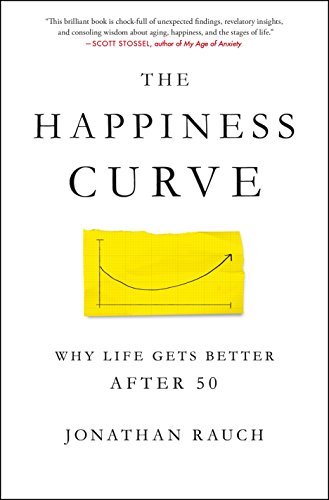
Have you ever wondered why so many people experience a mysterious dip in happiness during their middle years, only to find themselves feeling better again as they age? This counterintuitive phenomenon reveals one of life's most profound yet overlooked truths, one that can fundamentally transform how you understand your own emotional landscape and navigate the challenges you face.
The concept of the happiness curve represents a revolutionary shift in how we view human emotional development across the lifespan. Rather than assuming happiness should remain constant or continuously improve as we achieve our goals, this framework suggests that life follows a predictable pattern: contentment in youth, a decline into what many describe as a midlife crisis or depression, followed by a natural recovery and often increased wellbeing in later years. This isn't a sign of failure or psychological disorder, but rather a normal, universal human experience.
Understanding this pattern offers tremendous relief to countless individuals who find themselves struggling in their forties or fifties, wondering what went wrong. You may have achieved many of your goals, yet feel inexplicably empty. You might have the career, the family, the house, and still experience a persistent sense that something is missing. This disconnect between external success and internal satisfaction puzzles many accomplished people. Rather than viewing this as personal failure, recognizing it as a natural phase on the happiness curve reframes your experience entirely. You're not broken; you're right on schedule.
The implications of this discovery extend far beyond simple reassurance. When you understand that your midlife dissatisfaction follows a predictable trajectory, you can approach it with greater compassion for yourself and make more intentional choices about how to navigate this passage. Rather than desperately chasing happiness through acquisition or achievement, you can focus on deeper, more meaningful pursuits that research shows actually provide lasting satisfaction.
This exploration delves into why this curve exists in the first place. The answers lie in how our expectations evolve, how adaptation affects our emotional baseline, and what truly contributes to sustained wellbeing. You'll discover that the decline isn't necessarily caused by external circumstances, but rather by subtle shifts in psychology, perspective, and life priorities. A major job loss or relationship ending can accelerate the curve, but even people with ideal circumstances experience this predictable dip. This knowledge is liberating because it means you're not responsible for circumstances beyond your control; rather, you can focus on what you can actually influence.
The recovery phase offers particular insight for personal growth seekers. As people move beyond fifty and into their later years, something shifts. Many report increased contentment, clearer priorities, reduced anxiety about status and competition, and a stronger sense of purpose. This natural evolution suggests that wisdom isn't merely accumulated facts or experiences, but a genuine reorientation of values that comes with time and perspective. Understanding what creates this shift allows you to cultivate these beneficial qualities earlier rather than waiting for them to arrive automatically.
The practical applications of this framework extend to how you approach career decisions, relationship commitments, and personal development goals. Rather than assuming that achieving specific milestones will permanently elevate happiness, you can set more realistic expectations and invest in practices that research shows genuinely sustain wellbeing: meaningful relationships, purposeful engagement, physical health, and contribution to something larger than yourself.
For anyone navigating their middle years or approaching this phase, this exploration provides the validation that your experience is shared by millions. More importantly, it offers a map for understanding that what feels like darkness or failure is actually an invitation toward greater authenticity and purpose. The happiness curve isn't a problem to solve but a naturally occurring pattern that, when understood, can guide you toward deeper fulfillment and wisdom.