
Happiness & Success
Achieving Happiness Through Acceptance of Life
The quest for happiness often leads to frustration, as many fail to realize that the...








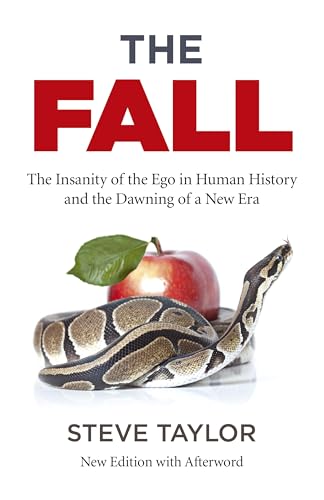
Imagine a time when human beings lived in harmony with nature, when aggression and warfare were virtually unknown, when social equality was the norm, and when a sense of connection to the world pervaded human consciousness. Archaeological evidence suggests such societies actually existed for thousands of years. Yet somewhere around 4000 BCE, a dramatic transformation occurred. Human civilization took a dark turn characterized by warfare, social inequality, environmental destruction, and a pervasive sense of separation from nature and each other. This wasn't gradual evolution—it was a psychological rupture that fundamentally altered human consciousness.
This groundbreaking work explores one of the most compelling questions in human history: what caused this radical shift in human nature and behavior? Drawing on extensive research from archaeology, psychology, anthropology, and mythology, a fascinating theory emerges that challenges conventional assumptions about human development. Rather than representing progress or advancement, this transformation actually represented a psychological catastrophe—a "fall" from a more harmonious state of being that continues to shape our modern predicament.
The central thesis examines how environmental catastrophes in Central Asia and the Middle East around six thousand years ago triggered profound changes in human psychology. As fertile lands became arid deserts, groups of people faced extreme hardship that fundamentally altered their consciousness. A new ego structure emerged—one characterized by a sharp sense of separation, an intensified awareness of individuality, and a disconnection from the natural world. These groups, termed "Ego Explosion peoples," spread across Europe, the Middle East, and Asia, bringing with them a radically different worldview.
Read more ▼
Sonia Ricotti, James Redfield

Noelle C. Nelson, Jeannine Lemare Calaba

Eileen Day McKusick

Tending the Earth Mending the Spirit
Richard Mahler
The quest for happiness often leads to frustration, as many fail to realize that the...

Reaching sixty can evoke complex emotions, blending relief with ongoing ambition. This...

The quest for life's purpose often leads to unsatisfactory answers. This article...

Romantic love is a complex emotion shaped by historical, cultural, and biological...

Imagine going through one of the most physically and emotionally demanding experiences...

Have you ever argued over something that wasn't actually said? From cultural differences...

Daily actions often conflict with personal beliefs due to past experiences. By utilizing...

Therapists often use dream interpretation to delve into patients' emotions, but true...