
Happiness & Success
Achieving Happiness Through Acceptance of Life
The quest for happiness often leads to frustration, as many fail to realize that the...









Deep within the fabric of existence lies a profound paradox that challenges everything we thought we knew about order, chaos, and the fundamental nature of reality. For centuries, we've been taught to view the universe as a vast machine, predictable and deterministic, where disorder represents failure and chaos signals the breakdown of natural law. Yet emerging from the cutting edge of thermodynamics and complexity science comes a revolutionary understanding that turns this worldview inside out, revealing how creative disorder and unpredictability are not aberrations but essential features of an evolving, self-organizing cosmos.
This groundbreaking exploration invites readers on an intellectual and spiritual journey that bridges the gap between hard science and the deeper questions of human existence. At its heart lies a radical reinterpretation of the second law of thermodynamics, traditionally understood as nature's inexorable march toward disorder and heat death. Instead, what emerges is a vision of entropy not as a curse but as a creative force, the very engine that drives the universe toward increasing complexity, novelty, and life itself.
The narrative weaves together insights from physics, chemistry, biology, and philosophy to demonstrate how systems far from equilibrium, those poised at the edge between stability and chaos, spontaneously give rise to astonishing patterns of self-organization. From the swirling patterns of convection cells to the intricate choreography of chemical reactions, from the emergence of life on primordial Earth to the development of consciousness itself, we discover that nature's most beautiful and complex structures arise precisely where classical science predicted only disorder.
Read more ▼
Know Your Blood, Know Your Health
Kristin Grayce McGary

Heather C. Flores, Toby Hemenway
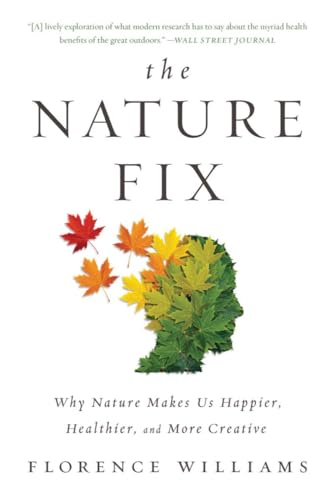
Florence Williams
The quest for happiness often leads to frustration, as many fail to realize that the...

Reaching sixty can evoke complex emotions, blending relief with ongoing ambition. This...

The quest for life's purpose often leads to unsatisfactory answers. This article...

Imagine going through one of the most physically and emotionally demanding experiences...

Romantic love is a complex emotion shaped by historical, cultural, and biological...

Daily actions often conflict with personal beliefs due to past experiences. By utilizing...

Have you ever argued over something that wasn't actually said? From cultural differences...

Therapists often use dream interpretation to delve into patients' emotions, but true...