
Happiness & Success
Achieving Happiness Through Acceptance of Life
The quest for happiness often leads to frustration, as many fail to realize that the...








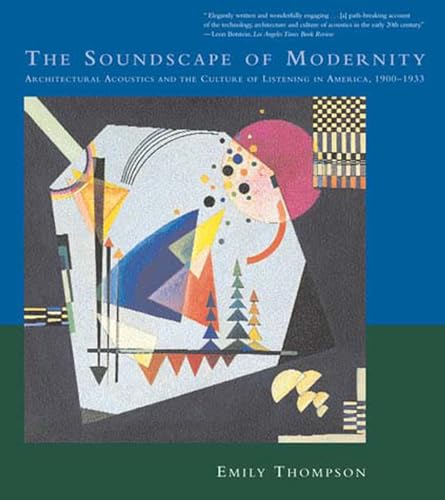
Sound shapes our consciousness in ways we rarely acknowledge. Every hum of machinery, every architectural echo, every technological innovation that changes how we hear transforms not just our physical environment but our inner landscape. This groundbreaking exploration reveals how the acoustic transformation of early twentieth-century America fundamentally altered human perception, awareness, and ultimately, our sense of self in the modern world.
Between 1900 and 1933, Americans experienced a revolutionary shift in their sonic environment. The sounds of industrial machinery, electrified streetcars, construction, and new technologies created an entirely novel acoustic experience. Rather than simply accepting this transformation as inevitable progress, this work illuminates how people actively shaped, designed, and gave meaning to these new sounds. Through careful historical research and cultural analysis, readers discover that the modern soundscape was not merely a byproduct of industrialization but a deliberately constructed environment reflecting new values, aspirations, and ways of being.
Understanding this transformation offers profound insights for personal empowerment today. We live in an era of constant sonic bombardment—notification alerts, traffic noise, ambient music, and digital sounds permeate every moment. By examining how people in the past navigated their own acoustic revolution, readers gain tools for consciously engaging with their current sound environment rather than remaining passive recipients of sonic chaos. The work demonstrates that we possess more agency over our acoustic experience than we typically recognize.
Read more ▼
Carl Alasko

Conversations with God, Book 1
Neale Donald Walsch
Johann Hari

Pierre Teilhard de Chardin, Pierre Teilhard de Chardin
The quest for happiness often leads to frustration, as many fail to realize that the...

Reaching sixty can evoke complex emotions, blending relief with ongoing ambition. This...

The quest for life's purpose often leads to unsatisfactory answers. This article...

Imagine going through one of the most physically and emotionally demanding experiences...

Romantic love is a complex emotion shaped by historical, cultural, and biological...

Daily actions often conflict with personal beliefs due to past experiences. By utilizing...

Have you ever argued over something that wasn't actually said? From cultural differences...

Therapists often use dream interpretation to delve into patients' emotions, but true...