
Throughout history, societies have moved through predictable cycles of crisis and renewal, each generation playing its unique role in an epic drama that repeats approximately every eighty to one hundred years. Understanding these cycles provides a powerful framework for navigating our current era of upheaval and positioning ourselves for the transformative changes ahead.
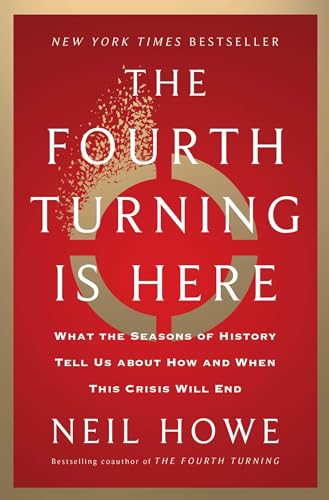
This groundbreaking work reveals how American history unfolds in recurring patterns called "turnings" – distinct eras that last roughly twenty years each. Just as nature moves through seasons, societies progress through fourturnings: a High (spring), an Awakening (summer), an Unraveling (autumn), and a Crisis (winter). We are now deep into the Fourth Turning, a period of crisis that began with the 2008 financial collapse and continues to reshape every aspect of our lives.
Drawing on decades of research into generational archetypes and historical cycles, this analysis demonstrates that what feels like unprecedented chaos is actually a predictable phase in a larger pattern. Previous Fourth Turnings include the American Revolution, the Civil War, and the Great Depression combined with World War II. Each of these crisis periods destroyed old orders and created new ones, fundamentally reorganizing society's institutions, values, and power structures.
For readers seeking to understand our turbulent times and their place within them, this work offers invaluable insights into how different generations respond to crisis. The eldest generation provides wisdom and stewardship. Midlife adults step into leadership roles, making the hard decisions that define the era. Young adults become the heroes who collectively sacrifice for the greater good. And children, protected during the crisis, will become the next generation of civic builders who consolidate the new order.
The analysis goes beyond mere historical pattern recognition to examine the specific challenges facing us now: political polarization, institutional collapse, economic inequality, global instability, and the fraying of social cohesion. Rather than viewing these as isolated problems, the framework reveals them as symptoms of a society in the throes of wholesale transformation. Understanding this larger context empowers individuals to respond strategically rather than reactively to events that might otherwise feel overwhelming.
Readers will discover how to leverage generational strengths during this critical period. Each generation alive today has distinct values, behaviors, and historical experiences that shape their crisis response. Recognizing these patterns in ourselves and others creates opportunities for more effective collaboration and mutual understanding across age groups. The work provides practical insight into why different generations often seem to talk past each other and how to bridge these divides when collective action becomes essential.
The predictive power of this cyclical framework offers something rare in our uncertain times: a roadmap for what likely lies ahead. While specific events cannot be predicted, the general trajectory of the Fourth Turning can be anticipated. The crisis will continue to intensify before reaching a climax that forces decisive resolution. The choices made during this climax will determine the shape of society for the next eighty years.
For those committed to personal empowerment and conscious living, understanding these cycles transforms how we engage with current events. Rather than feeling victimized by circumstances beyond our control, we can recognize our role in a larger historical drama. This perspective shift enables proactive preparation, thoughtful decision-making, and purposeful contribution to the emerging new order.
The work also addresses the unique challenges of the current Fourth Turning, including technological acceleration, demographic shifts, and global interconnection at scales unprecedented in previous cycles. These factors add complexity but don't fundamentally alter the pattern. History doesn't repeat exactly, but it does rhyme, and recognizing the rhythm allows us to anticipate the next stanzas.
Ultimately, this is a book about hope grounded in historical reality. Fourth Turnings are indeed times of crisis, destruction, and sacrifice. But they are also periods of profound renewal when societies rediscover shared purpose, rebuild institutions on sounder foundations, and create the conditions for future prosperity. Understanding where we are in this cycle empowers readers to navigate the challenges ahead with wisdom, courage, and clarity of purpose.