
Happiness & Success
Achieving Happiness Through Acceptance of Life
The quest for happiness often leads to frustration, as many fail to realize that the...








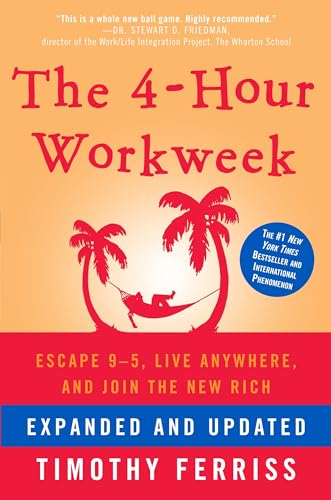
Imagine restructuring your entire relationship with work, time, and productivity to create a life of freedom, purpose, and authentic experiences rather than deferring your dreams until a distant retirement. This groundbreaking guide challenges the traditional notion that we must sacrifice the best decades of our lives in cubicles and offices, waiting for permission to truly live.
At its core, this work presents a radical reimagining of modern work culture and the assumptions that keep most people trapped in unfulfilling routines. Rather than accepting the conventional path of working forty-plus hours weekly for forty-plus years, readers discover concrete strategies for escaping the time-for-money trap and designing a lifestyle that prioritizes experiences, relationships, and personal fulfillment today rather than someday.
The foundation rests on a critical examination of busy-ness versus productivity. Many people confuse activity with accomplishment, filling their days with tasks that create the illusion of importance while yielding minimal results. Through practical frameworks and real-world examples, readers learn to identify the vital few activities that generate the majority of desired outcomes while eliminating or delegating the trivial many that consume precious time and energy. This principle of selective focus becomes transformative when applied consistently across all areas of life.
Read more ▼
Annemarie Colbin

Shepard, Paul

Alan Seale

Thomas Mary Berry
The quest for happiness often leads to frustration, as many fail to realize that the...

Reaching sixty can evoke complex emotions, blending relief with ongoing ambition. This...

The quest for life's purpose often leads to unsatisfactory answers. This article...

Imagine going through one of the most physically and emotionally demanding experiences...

Romantic love is a complex emotion shaped by historical, cultural, and biological...

Daily actions often conflict with personal beliefs due to past experiences. By utilizing...

Have you ever argued over something that wasn't actually said? From cultural differences...

Therapists often use dream interpretation to delve into patients' emotions, but true...