
Happiness & Success
Achieving Happiness Through Acceptance of Life
The quest for happiness often leads to frustration, as many fail to realize that the...








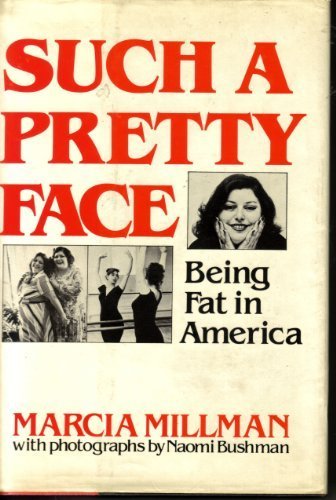
For decades, American culture has sent conflicting messages to women about their bodies, their appetites, and their right to take up space in the world. This groundbreaking sociological exploration delves deep into the lived experiences of overweight women, revealing how weight becomes far more than a simple health issue—it transforms into a complex intersection of identity, sexuality, power, and self-worth.
Through extensive interviews and careful observation, this work illuminates the hidden emotional landscape that overweight women navigate daily. Rather than focusing on diet plans or medical prescriptions, the investigation examines the psychological and social dimensions of being a larger woman in a society that prizes thinness above almost all other physical attributes. The insights gathered reveal patterns that many women will recognize immediately: the ways in which weight can serve as both protection and prison, the complicated relationship between food and emotions, and the profound impact of living in a body that society continually judges as inadequate.
One of the most powerful revelations concerns how women use weight as a form of control and self-expression in response to life circumstances. For many women interviewed, weight gain represents an unconscious strategy for managing difficult emotions, avoiding intimacy, or asserting independence in situations where they feel powerless. The "pretty face" that gives this work its poignancy refers to the backhanded compliment overweight women hear repeatedly—an acknowledgment of worth that simultaneously emphasizes what is perceived as lacking.
Read more ▼
H. Samm Coombs

Leonardo Trasande

David Blankenhorn

Shavasti
The quest for happiness often leads to frustration, as many fail to realize that the...

Reaching sixty can evoke complex emotions, blending relief with ongoing ambition. This...

The quest for life's purpose often leads to unsatisfactory answers. This article...

Imagine going through one of the most physically and emotionally demanding experiences...

Romantic love is a complex emotion shaped by historical, cultural, and biological...

Daily actions often conflict with personal beliefs due to past experiences. By utilizing...

Have you ever argued over something that wasn't actually said? From cultural differences...

Therapists often use dream interpretation to delve into patients' emotions, but true...