
Happiness & Success
Achieving Happiness Through Acceptance of Life
The quest for happiness often leads to frustration, as many fail to realize that the...








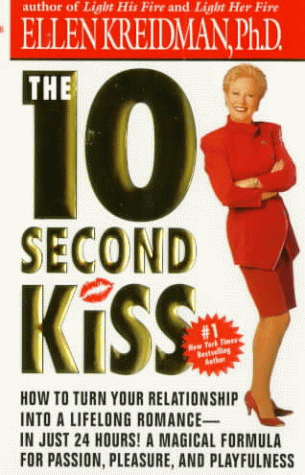
Passion fades. Romance dies. Intimacy becomes a distant memory. These are the dangerous myths that countless couples have accepted as inevitable truths about long-term relationships. The reality is that keeping love alive requires surprisingly little time but tremendous intentionality. What separates thriving partnerships from those that merely survive often comes down to small, consistent actions that take mere seconds but create lasting emotional connections.
At the heart of this transformative approach lies a deceptively simple premise: that tiny moments of genuine connection, repeated daily, possess far greater power to sustain intimacy than grand romantic gestures that occur only occasionally. A ten-second kiss shared with full presence and attention can accomplish more than an expensive dinner where both partners spend the evening distracted by their phones. A brief moment of eye contact that communicates "I see you, I choose you, I cherish you" can reignite feelings that years of routine have dimmed.
Readers discover a comprehensive system for rekindling passion and maintaining emotional intimacy through brief but meaningful daily rituals. These aren't complicated therapeutic exercises requiring hours of dedication. Instead, they're practical techniques that fit seamlessly into the busiest schedules, yet their cumulative impact can fundamentally alter the trajectory of a relationship. The approach recognizes that modern life is genuinely demanding, but also insists that we always have seconds to spare for what truly matters.
Read more ▼
Thomas Merton
Marianne Williamson

Barbara Max Hubbard
John Mordechai Gottman, Joan Declaire
The quest for happiness often leads to frustration, as many fail to realize that the...

Reaching sixty can evoke complex emotions, blending relief with ongoing ambition. This...

The quest for life's purpose often leads to unsatisfactory answers. This article...

Romantic love is a complex emotion shaped by historical, cultural, and biological...

Imagine going through one of the most physically and emotionally demanding experiences...

Daily actions often conflict with personal beliefs due to past experiences. By utilizing...

Have you ever argued over something that wasn't actually said? From cultural differences...

Therapists often use dream interpretation to delve into patients' emotions, but true...