
Happiness & Success
Achieving Happiness Through Acceptance of Life
The quest for happiness often leads to frustration, as many fail to realize that the...








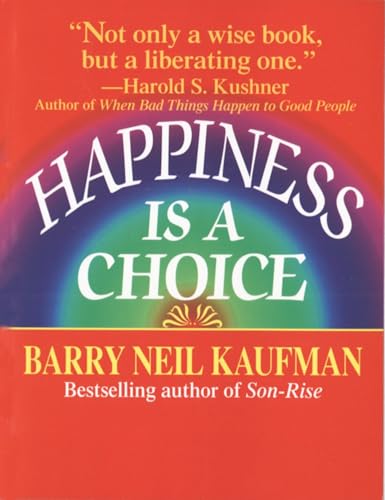
At the heart of human suffering lies a simple yet profound misconception: that our emotions are thrust upon us by external circumstances, leaving us powerless victims of life's unpredictable events. This transformative work dismantles that belief system and presents a radical alternative perspective drawn from decades of therapeutic practice and personal exploration. The central premise challenges conventional wisdom about human emotions and offers a liberating framework for understanding how we create our own emotional experiences moment by moment.
Drawing from the Option Process, a unique therapeutic approach developed through years of working with individuals and families facing seemingly impossible challenges, this work presents the revolutionary idea that unhappiness is not an inevitable response to difficult circumstances but rather a chosen reaction based on our beliefs and judgments. Through compelling real-life stories and clear philosophical reasoning, readers discover how their thoughts and beliefs directly generate their emotional states, and more importantly, how they possess the power to choose different thoughts and thus different feelings.
The exploration begins by examining the beliefs that underpin unhappiness. Every negative emotion, from anger and anxiety to depression and despair, stems from a judgment we make about our circumstances. These judgments are based on beliefs we hold about how the world should be, how people should behave, and what we need to be happy. By questioning these beliefs rather than accepting them as immutable truths, we can liberate ourselves from the emotional prison they create. The methodology presented involves a gentle yet penetrating self-inquiry process that helps individuals identify and examine the beliefs driving their unhappiness.
Read more ▼
Leaving Faith, Finding Meaning
Lynne Renoir, Damian Keenan

Michael Booth

Arthur Ocean Waskow
Barry Magid
The quest for happiness often leads to frustration, as many fail to realize that the...

Reaching sixty can evoke complex emotions, blending relief with ongoing ambition. This...

The quest for life's purpose often leads to unsatisfactory answers. This article...

Romantic love is a complex emotion shaped by historical, cultural, and biological...

Imagine going through one of the most physically and emotionally demanding experiences...

Daily actions often conflict with personal beliefs due to past experiences. By utilizing...

Have you ever argued over something that wasn't actually said? From cultural differences...

Therapists often use dream interpretation to delve into patients' emotions, but true...