
Happiness & Success
Achieving Happiness Through Acceptance of Life
The quest for happiness often leads to frustration, as many fail to realize that the...








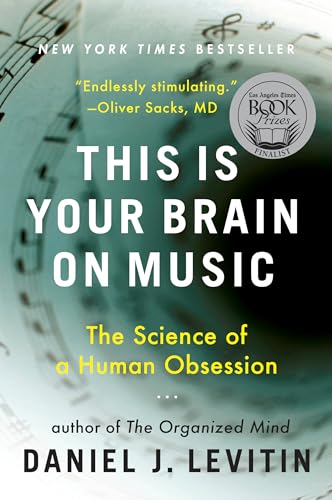
Music moves us in ways that few other human experiences can match. A familiar melody can instantly transport us back to a cherished memory, a stirring symphony can bring tears to our eyes, and an upbeat rhythm can compel our bodies to move. Yet despite music's universal presence in human culture and its profound impact on our emotions and behavior, most of us have little understanding of why and how it affects us so deeply. This fascinating exploration into the neuroscience of music reveals the intricate dance between sound waves and brain chemistry, offering readers a revolutionary perspective on one of humanity's most beloved art forms.
Drawing on cutting-edge research in neuroscience, psychology, and music theory, this work illuminates the complex neural processes that occur when we listen to, perform, or even think about music. Readers discover how different regions of the brain collaborate in an elaborate network to process rhythm, melody, harmony, and timbre. The explanation of how our brains predict musical patterns and experience pleasure when those predictions are either confirmed or pleasantly surprised provides profound insight into why certain songs become stuck in our heads or why we feel compelled to replay favorite tracks repeatedly.
The journey begins with an examination of the basic building blocks of music, breaking down concepts like pitch, rhythm, tempo, and timbre in accessible language that requires no musical training to understand. From there, the exploration deepens into how our brains organize and categorize these elements, creating the rich tapestry of musical experience. Readers gain understanding of why major keys typically sound happy while minor keys sound sad, and how composers and musicians exploit our neural wiring to create emotional responses.
Read more ▼
White Deer of Autumn.
Julia Galef

Ralph Metzner

Astrology for the light side of the brain
Kim Rogers-Gallagher
The quest for happiness often leads to frustration, as many fail to realize that the...

Reaching sixty can evoke complex emotions, blending relief with ongoing ambition. This...

The quest for life's purpose often leads to unsatisfactory answers. This article...

Romantic love is a complex emotion shaped by historical, cultural, and biological...

Imagine going through one of the most physically and emotionally demanding experiences...

Daily actions often conflict with personal beliefs due to past experiences. By utilizing...

Have you ever argued over something that wasn't actually said? From cultural differences...

Therapists often use dream interpretation to delve into patients' emotions, but true...