
Happiness & Success
Achieving Happiness Through Acceptance of Life
The quest for happiness often leads to frustration, as many fail to realize that the...








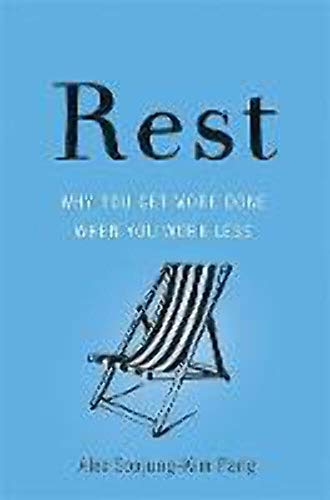
We live in a culture that glorifies busyness and treats rest as something to be earned only after complete exhaustion. The prevailing wisdom suggests that success requires relentless work, constant availability, and the sacrifice of downtime. Yet what if this entire framework is backward? What if rest isn't the opposite of work but rather its essential partner, and what if learning to rest properly could actually make us more creative, productive, and successful?
This groundbreaking exploration challenges everything we think we know about rest, work, and achievement. Drawing on cutting-edge neuroscience, historical analysis of creative geniuses, and interviews with accomplished professionals across diverse fields, this work reveals a counterintuitive truth: deliberate rest is not a luxury or a sign of laziness, but a skill that can be cultivated and a necessity for doing our best work.
The central revelation is that many of history's most accomplished figures, from Charles Darwin to Ingmar Bergman, weren't actually working as many hours as we might imagine. Rather, they worked with intense focus for relatively short periods, then engaged in specific forms of rest that allowed their unconscious minds to continue processing problems creatively. These accomplished individuals understood something that modern research is now confirming: the brain doesn't stop working when we rest; it simply works differently, making connections and solving problems that the conscious, focused mind cannot.
Read more ▼
Christopher Hitchens

Jane Goodall

Ken Wilber
The quest for happiness often leads to frustration, as many fail to realize that the...

Reaching sixty can evoke complex emotions, blending relief with ongoing ambition. This...

The quest for life's purpose often leads to unsatisfactory answers. This article...

Romantic love is a complex emotion shaped by historical, cultural, and biological...

Imagine going through one of the most physically and emotionally demanding experiences...

Daily actions often conflict with personal beliefs due to past experiences. By utilizing...

Have you ever argued over something that wasn't actually said? From cultural differences...

Therapists often use dream interpretation to delve into patients' emotions, but true...