In This Article
- What is shingles and why does it matter for brain health?
- What did the Brown University study discover about dementia risk?
- Why do scientists think the shingles vaccine might protect the brain?
- What do researchers still not know, and why does that matter?
- What can you do today to support long-term brain health?
There are moments in science when a discovery arrives sideways, when researchers set out to answer one question and stumble onto something far more interesting. That is exactly what has been unfolding over the past several years in the world of dementia research. A vaccine created to prevent a painful and debilitating skin disease is showing up, again and again, in studies suggesting it may also lower the risk of one of the most feared conditions of aging. Scientists are excited. They are also careful. And the story is worth understanding fully, not just in headlines.
What Shingles Actually Is and Why It Comes Back
Many people are surprised to learn that shingles is not a new infection. It is a reawakening. If you had chickenpox as a child, the varicella-zoster virus never fully left your body. It retreated into your nervous system, tucked quietly into the nerve tissue along your spine, and waited. For most people, the immune system keeps it dormant for decades. But as we age, immune function naturally declines, and that careful balance can shift.
When the virus reactivates, it travels along nerve pathways and erupts as shingles, typically a painful, blistering rash on one side of the body. For some people the pain resolves quickly. For others, nerve damage lingers for months or even years. What researchers have begun to suspect is that this reactivation, and the inflammation it triggers, may do more than cause a rash. It may ripple outward in ways that reach the brain itself.
The Brown University Study and What It Found
A landmark study from Brown University brought this question into sharper focus. Researchers analyzed data from more than 500,000 older adults living in skilled nursing facilities across the United States. The results showed that residents who had received the shingles vaccine had approximately a 24% lower rate of dementia diagnosis over four years compared to those who had not been vaccinated.
The study used a method called target trial emulation. In plain English, this means the researchers used sophisticated statistical techniques to make their observational data resemble a randomized clinical trial as closely as possible. They worked to account for factors that might otherwise skew the results. But it is important to understand that an observational study, even a carefully designed one, still cannot prove that the vaccine directly causes a reduction in dementia. It identifies a strong and meaningful association, which is itself a significant finding, while pointing toward questions that only randomized clinical trials can ultimately answer.
Why Scientists Think There Might Be a Connection
Several biological hypotheses are being actively investigated. One centers on inflammation. Shingles triggers a significant inflammatory response in the nervous system, and chronic neuroinflammation is increasingly understood to play a role in the development and progression of dementia. By preventing shingles, the vaccine may prevent some of that inflammatory damage from occurring in the first place.
Another hypothesis involves the cumulative effect of repeated viral reactivations over a lifetime. Even subclinical reactivations, ones that never produce a full rash or noticeable symptoms, may quietly damage small blood vessels or nerve tissue in ways that contribute to cognitive decline over many years. A third line of thinking involves immune regulation more broadly, the idea that vaccination may help train and maintain a more resilient immune response in older adults. It is worth repeating clearly: these remain working hypotheses under active investigation, not established mechanisms. Science is asking the question. It has not yet delivered the final answer.
This Was Not the First Study to Notice
What makes the Brown University findings particularly compelling is that they did not arrive in isolation. Researchers have been noticing this pattern for years, across different populations, different countries, and different versions of the vaccine. Earlier studies examined Zostavax, the older shingles vaccine. More recent research has focused on Shingrix, the newer two-dose vaccine that offers significantly stronger protection.
A large study from Wales, which used a natural experiment created by a specific vaccination eligibility cutoff, found that people just old enough to qualify for the shingles vaccine had meaningfully lower dementia rates than those just below the cutoff age. Research from Kaiser Permanente added further weight to the picture. One study involving more than 300,000 older adults found an approximately 51% lower dementia risk among people who completed the full two-dose Shingrix series, though researchers also worked to account for the possibility that healthier, more health-conscious people are simply more likely to get vaccinated in the first place. Different populations, different methods, similar signals. That pattern matters.
What Researchers Still Do Not Know
This is the part of the story that deserves just as much attention as the exciting findings. Association is not proof of causation. One of the persistent challenges in this area of research is something called healthy-user bias. People who get vaccinated tend, on average, to be more engaged with their health overall. They are more likely to exercise, manage chronic conditions, see their doctors regularly, eat reasonably well, and avoid smoking. All of those factors independently influence dementia risk, and it is genuinely difficult to fully separate the effect of the vaccine from the effect of the lifestyle that surrounds it.
Researchers are aware of this challenge and work hard to account for it statistically, but unmeasured lifestyle differences are, by definition, difficult to measure. What is needed, and what scientists are actively calling for, is a large-scale randomized clinical trial in which participants are randomly assigned to receive the vaccine or not, regardless of their health habits. That kind of trial would provide far stronger evidence. Until it exists, the findings are meaningful, hypothesis-generating, and worth taking seriously, but they should not be overstated.
A New Way of Thinking About Dementia and the Brain
The shingles vaccine story reflects something much larger happening in dementia research right now. For a long time, Alzheimer's disease in particular was understood almost entirely through the lens of abnormal protein accumulation, amyloid plaques and tau tangles building up in brain tissue over decades. That model is not wrong, but it has proven incomplete.
Increasingly, researchers are looking at inflammation, immune function, vascular health, metabolic disease, sleep disruption, hearing loss, social isolation, and yes, viruses, as interacting factors that shape who develops dementia and when. The brain does not exist in a sealed chamber. It is deeply responsive to what is happening throughout the rest of the body, including in the immune system and the bloodstream. This more holistic model is changing what prevention looks like and opening doors that the old model kept firmly closed.
Protecting Your Brain Starts Long Before Symptoms Appear
Here is what is already well established, even while the vaccine research continues to develop. Regular physical exercise remains one of the most consistently protective factors for brain health across the research literature. Managing blood pressure, controlling blood sugar, protecting hearing, getting enough sleep, staying socially connected, and eating a varied whole-food diet all appear to meaningfully influence long-term cognitive health. These are not soft lifestyle suggestions. They are supported by decades of evidence.
Vaccination, based on the emerging research, may be joining this list. But the key word is joining. No single intervention protects the brain in isolation. The picture is always about overall health, sustained across decades, supporting the systems that the brain depends on to function well as we age. That framing matters because it keeps the focus where it belongs: on the whole person, not just on one shot or one pill.
What You Can Actually Do With This Information
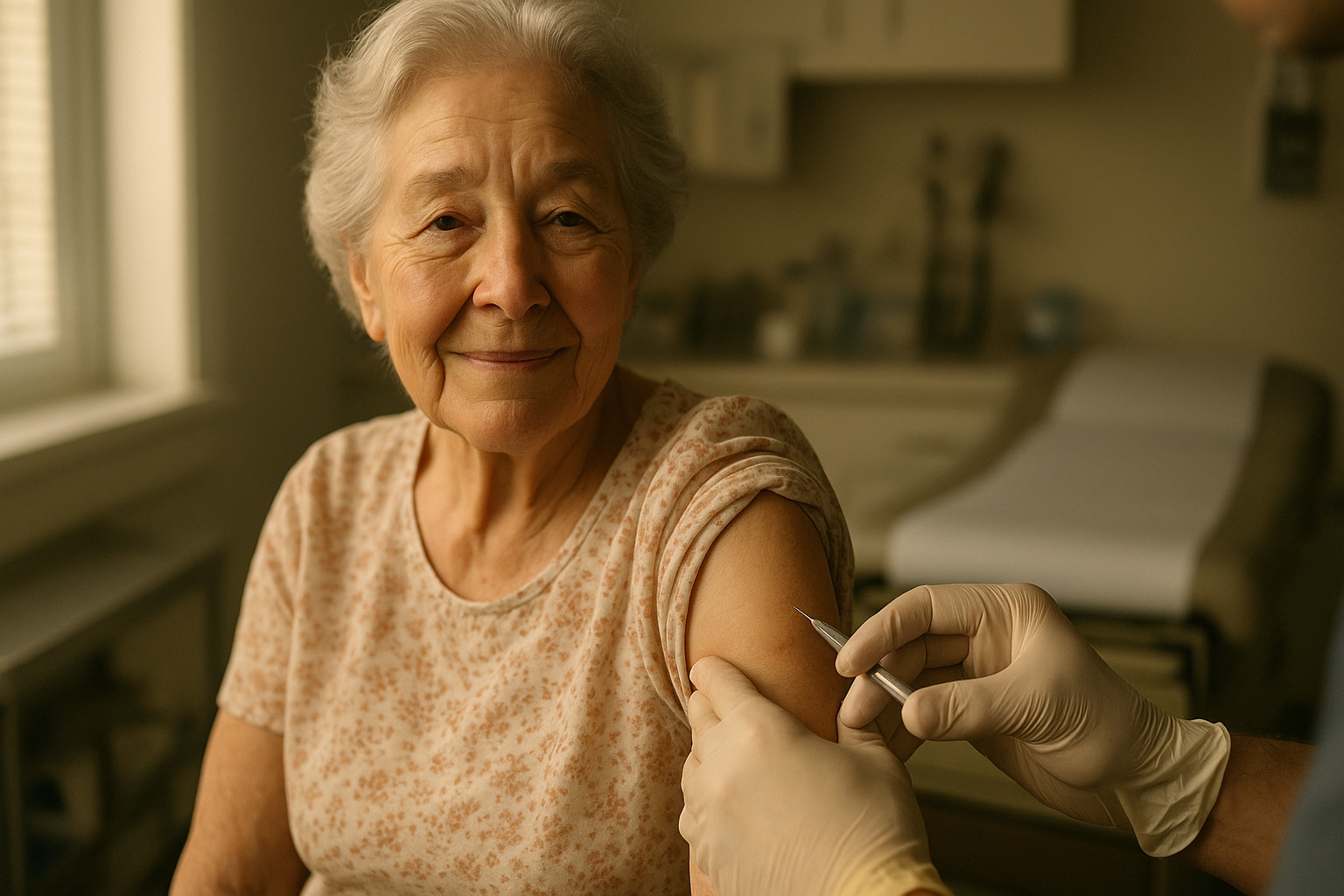
It would be easy to read this research and either dismiss it as premature or treat it as a definitive reason to rush out and get vaccinated. Neither response quite fits the evidence. What the research does tell you is that the shingles vaccine is already strongly recommended for adults aged 50 and older in the United States, specifically because it is highly effective at preventing shingles and its complications, including severe nerve pain that can last for years. That recommendation stands entirely on its own merits, separate from any dementia connection.
The cognitive findings are an active and genuinely promising area of ongoing research, one that adds further weight to a decision that already made good sense for a different reason. Know your vaccination status. Talk with your healthcare provider about eligibility, especially if you are in or approaching that 50-plus window. And while you are at it, take the broader picture seriously: sleep, movement, blood pressure, connection, and purpose are not peripheral concerns. They are foundational ones. The brain you are living in right now is the same one you will be relying on decades from now. Caring for it is not something you do later. It is something you do today.
The Brain Has Never Been Separate From the Rest of You
For generations, medicine treated the brain as though it existed apart from the rest of the body, a sovereign organ operating on its own logic. Emerging research keeps dismantling that idea, gently and persistently. The brain is woven into the immune system, the cardiovascular system, the gut, the sleep cycle, the metabolic rhythms that govern every cell. What happens in the body reaches the brain, and what happens in the brain reverberates outward.
The story of the shingles vaccine and dementia is not really about one shot. It is about what becomes possible when we stop treating aging diseases as isolated problems and start understanding them as expressions of whole-system health. Whether future randomized trials confirm a direct protective effect or reveal a more nuanced explanation, the direction of travel is already becoming clear. Protecting the brain means protecting the whole person. That is not a new idea in spiritual and holistic thinking. It is becoming a central insight in modern medicine as well.
About the Author
Beth McDaniel is an ai staff writer for InnerSelf.com. She researches and then writes articles based on the topics selected by InnerSelf publishers, Marie T. Russell and Robert Jennings.
Recommended Books
The End of Alzheimer's by Dale Bredesen — A neurologist presents a comprehensive, multi-factor approach to preventing and reversing cognitive decline through lifestyle, diet, and targeted interventions.
Keep Sharp: Build a Better Brain at Any Age by Sanjay Gupta — A neurosurgeon and journalist explores the science of brain health and offers practical strategies for protecting cognitive function across a lifetime.
The Inflamed Mind by Edward Bullmore — A Cambridge psychiatrist makes a compelling case for the deep connection between immune system inflammation and brain health, opening new frontiers for treatment and prevention.
Article Recap
Emerging research on the shingles vaccine and dementia risk is part of a broader scientific shift toward understanding how immune system health, chronic inflammation, and viral reactivation influence long-term cognitive decline. Multiple large studies across different populations have found associations between shingles vaccination and meaningfully lower dementia diagnosis rates, though researchers emphasize that randomized clinical trials are still needed to establish a direct causal link. Protecting brain health as you age remains a whole-body endeavor, and vaccination, alongside exercise, sleep, cardiovascular health, and social connection, may play a meaningful supporting role in that larger picture.
#DementiaRisk #ShinglesVaccine #BrainHealth #DementiaPrevention #AgingWell #ImmuneSystemHealth #CognitiveDecline #AlzheimersResearch #VaccineResearch #HealthyAging