

Life Changes
Use It or Lose It: The Hidden Power of Attention
What if "use it or lose it" applies to far more than muscles and physical skills? The hidden power of attention shapes everything from intuition and empathy to habits, dreams,...


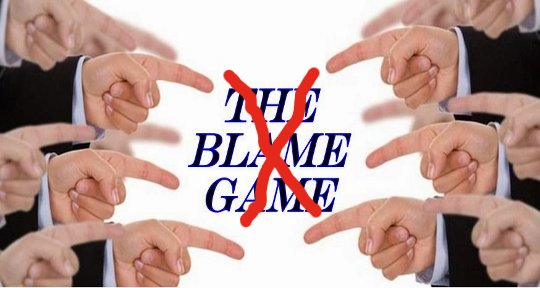



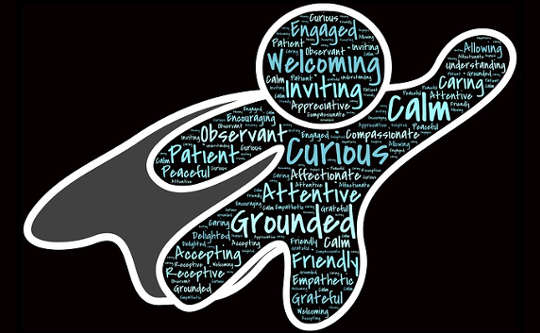








 The time has come to make a decision. Humanity as a collective is nearing the end of its ability to go on the way it has been. That isn’t meant to be a doomsday warning, just a word to the wise. We have to change course here, and the fastest way we can do it is to change our ideas about God.
 To experience happiness in our daily lives does not mean hiding our heads in the sand. It’s not about feeling absolutely wonderful all the livelong day. We’re meant to feel bad as well as good—the part of our brains that experiences fear, worry, sorrow, and anger is there to protect us from danger and spur us into action.


 If we look at human history, we find it replete with animals, in legend and lore. Beginning with the oldest cave paintings, and continuing into the print and electronic media of current times, animals are deeply embedded in our stories because they inform our ways of understanding the world. Since humanity’s beginnings, they have helped us to survive and thrive...
 At the end of the school year, districts often send stacks of books home with their students in the hopes of combating the “summer slide” in reading skills. This type of literacy loss hits low-income students particularly hard.
 Only in my life’s rear-view mirror do I see that I began to write “The Un-Game” long ago. As a cross-culturally naïve eleven-year-old, my world was rocked upon my arrival in New York City with my immigrant family. The assault on my German mind-set felt like an earthquake snatching away all my precious, unquestioned certainty.
  The more committed we are to achieving a goal—catching a train, buying a movie ticket, getting groceries—the more likely we are to assume others have exactly the same objective. The new study by New York University psychology researcher Janet Ahn points to the types of assumptions we make about others’ behavior, which may have an impact on social interaction.
 Mercury stationed retrograde at 1:44 am GMT on 19th May 2015, and remains in its own sign, Gemini, throughout its retrograde passage. Practically speaking, this is an inquisitive Mercury, seeking information and answers, reviewing events of the past three months, wondering about relationships and connections with others and generally taking stock and sorting through unfinished business. It efficiently clears the decks of outstanding matters, enabling positive progress in the months to come.
 A simple experiment with a small group of college students suggests that punishments influence behavior more than rewards. In fact, punishments—in this case, losing money tokens—had a measured impact two to three times great than winning money. The results appear in the journal Cognition.
 One after another sat next to me and just slipped into my arms. Nothing needed to be said. We just looked into each other’s eyes and shared the common sadness. I needed only to love; they needed only to be loved.
 When we think of the word wound, we usually do not associate it with sources of wisdom or personal power, but your wounds can reveal great knowledge and self-understanding. When you have experienced suffering that splits you open, you have the opportunity to understand the true meaning of the heart of compassion for yourself and for others in your life.
 It is said that every tiny bit of restoration of wholeness within ourselves directly contributes to the restoration and awakening of all beings and of the whole world. The impulse of every movement toward healing, every moment of mindfulness, every act of kindness we generate within ourselves, is directly shared or transmitted...
 Let’s face it breakups hurt. Why? Well, for the most part it’s painful because it represents a loss. And, I’m not just talking about the loss of a loved one, but of the dream that you thought you once shared. Often this sense of a letdown is followed by stress and grief.
 How do you encourage other people when they are changing their behavior? Chances are you want to be supportive, so you focus on saying positive things to people. And that can be great. But there are several potential problems that lurk when you give feedback to others.
 For a good marriage, who is the most important person with whom you should be communicating well? If you think it’s your spouse, think again. The most important person to converse with constructively is yourself! You need not try to resolve every situation by talking it over with your partner.
 When I first started using intentions, I did so because they felt good. They were positive, uplifting, and shifted my perspective to one that was more open. It wasn’t until I started exploring neurolinguistic programing as part of my life-coaching education that I realized what I was doing was conditioning these beliefs to who I was.
 All good communication boils down to following four simple rules. Abiding by them, anyone can communicate about any topic effectively and lovingly. There are also four opposing violations that create the misunderstandings and ensuing hurt, alienation and confusion that we experience when communicating with others.
 There are two different types of acknowledgment. There are compliments which are more superficial and then there are deeper appreciations that involve your character and inner qualities. How do you handle acknowledgment from others?
 May 2015 raises the issue of relationship: with ourselves, each other and our environment both near and far. We simply cannot go it alone, is the basic message of this month, nor can we expect others to do it for us. It is time to take full responsibility for ourselves whilst simultaneously recognising that we do nothing in isolation.





