
Happiness & Success
Achieving Happiness Through Acceptance of Life
The quest for happiness often leads to frustration, as many fail to realize that the...









All our fears are unique and different, born out of different experiences and often maintained through subconscious programming throughout life. Conquering such origins of fear once and for all, ultimately will allow you to meet with your life’s goals and purpose. Because at the end of the day, the only thing holding any of us back is ourselves and how we process, manifest and deal with fear.

We can get side-tracked by our ego that wants to be right at any price. It doesn't care about lost friendships, or uncomfortable work relations, or families torn apart by pride -- it only cares about being right. How often do we let "being right" step into the way of peace...

People living in colder regions with less sunlight drink more alcohol than their warm-weather counterparts, research shows.

Why do we often neglect big problems, like the financial crisis and climate change, until it's too late?

To gain insight into the psychology of radicalization and terrorist violence, researchers scanned the brains of men who support a terrorist organization associated with Al Qaeda.

Long-time “Jeopardy!” host Alex Trebek announced in March that he had been diagnosed with stage 4 pancreatic cancer.
 Don’t drive into the tunnel ... The dog’s going to bite ... Patients have described their phobias to me as walking around with the devil on their shoulder or a voice inside their head that just won’t stop. Whether temporarily self-defeating or utterly crippling, phobias can get hold of us and seem to take over.
 We make meaning in the world around us by taking a limited number of external facts and interpreting them. Our interpretations are based on the frames of personal experience, the roles we play, and family dynamics.

At the end of May 2019, it happened again. A mass shooter killed 12 people, this time at a municipal center in Virginia Beach.
 In order to experience fearlessness, it is necessary to experience fear. In order to experience fearlessness, it is necessary to experience fear. True fearlessness is not the reduction of fear; but going beyond fear...
 Have you ever found yourself wanting to 'fix' people? You know... when you can clearly see everything that's wrong with them and want to reorganize them and their life? It seems so easy for us to look at someone else and see everything that they need to do to improve themselves. It seems so easy to 'fix' someone else...
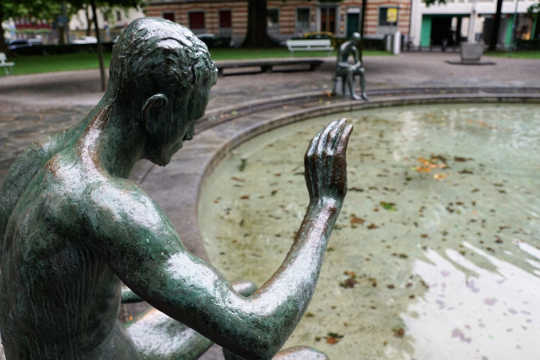 "There is a gift behind each disappointment and sadness." These are words my mother spoke to me countless times growing up. But we need to trust that a gift will come. This trusting can be difficult though, especially when it appears over time that no gift is coming.

A slowdown in the economy, job losses, business closures, increasing energy bills: it’s not surprising that relentless negative reporting of economic downturns is impacting people’s emotional health.
 Acceptance is a major theme of world religions. In modern life, however, acceptance is tension-filled and problematic. The urge to fix, change, and improve pops up at every turn. Reinhold Neibuhr summed up this tension in his Serenity Prayer, written in 1934: 'God, grant me the serenity to accept the things I cannot change...'

Hedonism – the pursuit of pleasure, enjoyment, or fun – might sound like a strange way to tackle binge drinking.
 By the time we are adults, we have so much writing on our walls and we have so many old wounds from unresolved experiences that many of our responses are automatically negative. They perpetuate events that are not the best outcome and instead, they serve only to reinforce our initial learning from a time long ago.
 You don’t have to create adverse circumstances to find a reason to do what you wish to do or avoid what you do not wish to do. Just be honest. If you have a difficult decision before you, ask yourself, “What am I hoping will happen?” In the answer is your guide to your likely best path.

Toward the end of the Renaissance period, a radical epistemological and metaphysical shift overcame the Western psyche.
 The best way to understand Gandhi's philosophy of nonviolence is to first understand the extent of the violence we practice, consciously or unconsciously, every day of our lives -- name-calling, teasing, insulting, disrespectful behavior. These are passive forms of violence.

Albert Einstein said, “We can’t solve our problems with the same thinking that we used to create them.” I wonder what he would say today? My guess is that he would be shouting aloud while pointing to the life-threatening problems our old thinking has produced.
 When we don't express our anger constructively, we go negative with our judgments and feel mad because the world isn't living up to our expectations. Over the years, this becomes the lens through which we view the world. Instead of dealing with our emotions...
The quest for happiness often leads to frustration, as many fail to realize that the...

Reaching sixty can evoke complex emotions, blending relief with ongoing ambition. This...

The quest for life's purpose often leads to unsatisfactory answers. This article...

Have you ever argued over something that wasn't actually said? From cultural differences...

Imagine going through one of the most physically and emotionally demanding experiences...

Romantic love is a complex emotion shaped by historical, cultural, and biological...

Daily actions often conflict with personal beliefs due to past experiences. By utilizing...

Therapists often use dream interpretation to delve into patients' emotions, but true...