In This Article
- What separates genuine hope from optimism, wishful thinking, and positive thinking?
- How does feeling hopeful actually predict whether life feels meaningful?
- What does hope do to your body, your health, and your future outcomes?
- Why hope can be paradoxically painful for some people — and what that really means
- How to cultivate mindful hope as a daily practice, not just a personality trait
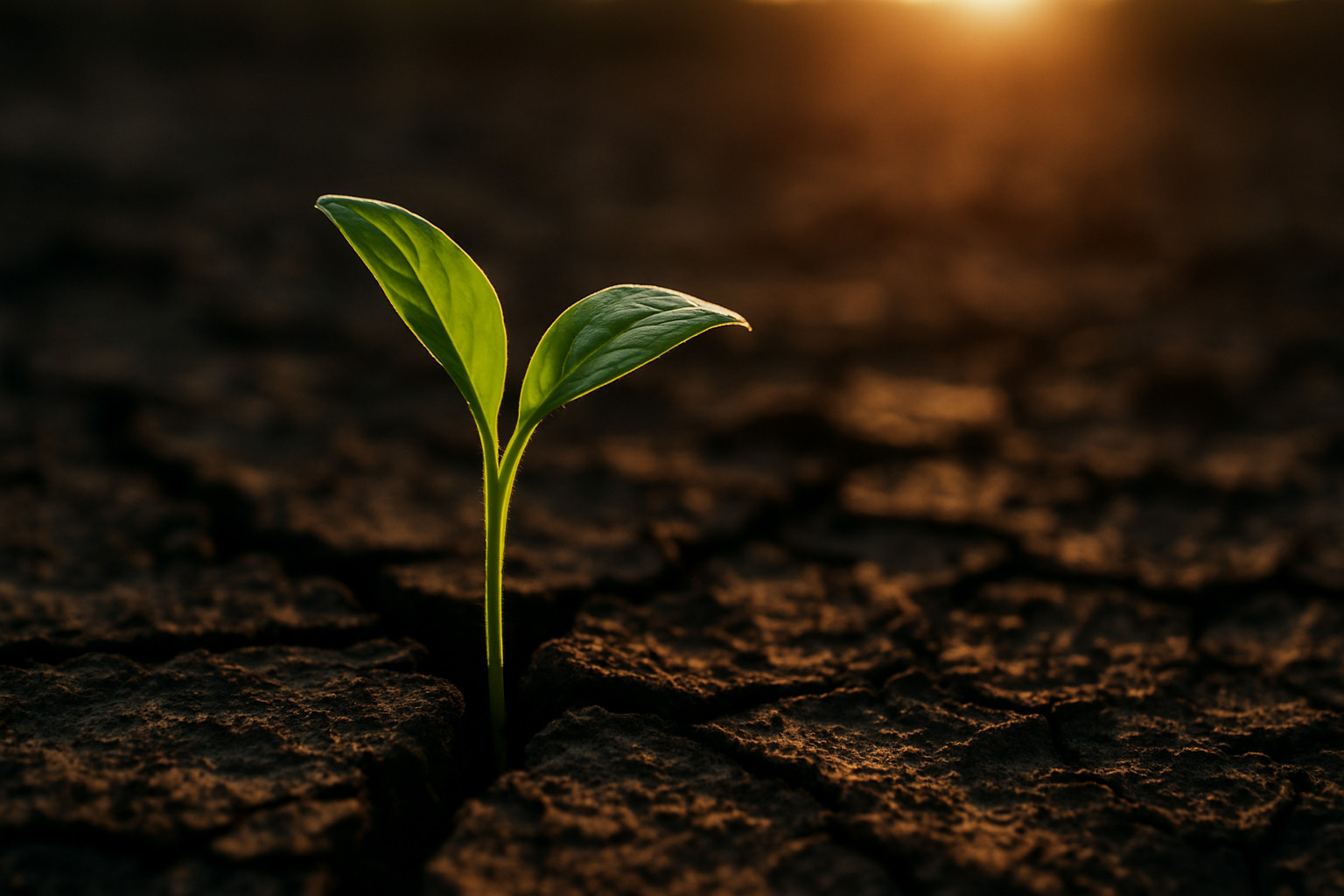
There is a moment most of us recognize. You are in the middle of something hard — a loss, a diagnosis, a relationship that has gone quiet in all the wrong ways — and someone tells you to stay positive. You nod. You do not feel it. Positivity, in those moments, can feel like a costume you are being asked to wear over an open wound. But hope is something else entirely. Hope is not a performance. It is not the bright face you put on for other people. It is a quiet, stubborn, interior conviction that the future is still open — that your effort still matters, that meaning is still possible. And the science of what that conviction actually does to human beings is striking enough to change the way you think about your own inner life.
Hope Is an Emotion Not Just a Way of Thinking
For decades, most psychological research treated hope as a cognitive trait. The dominant model framed it as goal-directed thinking — you identify what you want, you map out pathways to get there, and you feel motivated enough to walk them. That framework was useful, but it missed something.
New research published in the journal Emotion by Edwards and colleagues in 2025 studied 2,312 participants across six separate studies and found that hope as a felt experience — not just a thinking style — uniquely predicts whether people find life meaningful. On days when participants felt more hopeful, they reported that life felt more meaningful. And in longitudinal tracking, those hopeful feelings predicted future meaning in life even after the researchers controlled for other positive emotions. Happiness did not do this consistently. Contentment did not do this consistently. Hope did.
What makes this especially worth sitting with is the scope of meaning it touched. Hope was linked to all three recognized dimensions of meaning: purpose, which is the sense that life is going somewhere; coherence, which is the sense that life makes sense; and significance, which is the sense that life actually matters. The researchers make a point that lands hard if you have ever been through a genuinely dark period. During difficult times, happiness may be completely unavailable to you. But hope, they argue, can remain accessible. It can carry meaning forward even when everything else feels shut.
What Hope Actually Does to Your Body and Your Future
The effects of hope are not limited to how you feel on a given afternoon. They reach into your physical health, your daily habits, and your long-term life outcomes in ways that are difficult to dismiss.
A landmark longitudinal study by Long and colleagues in 2020 tracked nearly 13,000 older adults with an average age of 66. Higher hope was associated with better sleep, more physical activity, greater life satisfaction, and fewer chronic health conditions. These are not trivial findings. These are the pillars of a longer, healthier life.
A broader 14-year longitudinal study of 25,000 Australian adults, published in Health Economics in 2026 by Graham and Mujcic, extended the picture further. People with high hope had better wellbeing, better education and employment outcomes, better perceived and objective health, and were less likely to be lonely — not just at the moment of measurement, but years down the road. The researchers describe hope as having what they call agentic properties. It does not just feel good in a passive way. It makes people act differently in ways that generate better outcomes over time. Hope, in this sense, is not a mood. It is a mechanism.
What Cancer Patients Teach Us About the Power of Inner Hope
Some of the most compelling evidence for hope's real-world force comes from people facing the most serious circumstances imaginable. A systematic review of 33 studies on hope in cancer patients, published in the Journal of Advanced Nursing in 2020 by Nierop-van Baalen and colleagues, found that quality of life, social support, and spiritual wellbeing were all positively linked to hope, while depression and psychological distress diminished it.
Here is what stopped many clinicians in their tracks: hope was not affected by the type or stage of cancer, or by the patient's demographics. It did not rise and fall based on prognosis. The researchers concluded that hope is determined by a person's inner being rather than influenced from the outside. That is not denial. That is a resource — one that clinical discomfort sometimes accidentally undermines when providers worry that a patient is hoping for something beyond what the numbers suggest.
There is a quieter finding here that matters to anyone who has ever sat with a loved one through a serious illness. The meaning that patients drew from social support was not about quantity. It was about whether that support felt genuine to them. Your presence, when it truly means something to the person you are with, sustains something essential in them. That is not sentiment. That is data.
The Paradox of Hope and Who It Helps Differently
Intellectual honesty requires saying this plainly: hope is not equally protective for everyone in every context, and some of the most interesting research in positive psychology hope makes that complexity visible rather than smoothing it over.
Research on Black college students by McDermott and colleagues, published in the Journal of Counseling Psychology in 2020, found something that initially looks like a contradiction. Students with higher hope experienced more stress when they encountered racial discrimination — not less. High hope raises the stakes of obstacles, because the distance between where you believe you could go and where you are being prevented from going is painful in a very specific and visible way. The gap is not abstract when you can feel your own potential clearly.
And yet those same high-hope students showed better academic integration despite the discrimination they faced. Hope did not protect them from psychological pain. But it kept them moving forward. The researchers are precise about what this means: it is not an argument against hope. It is an argument against discrimination. The answer is not to teach people to want less. The answer is to remove the barriers that make high hopes costly to hold. That distinction is important, and it should stay with us.
Mindful Hope as a Practice You Can Actually Build
One of the most practically useful ideas emerging from recent research is the concept of mindful hope, developed by Feldman, Shapiro, and Dreher in 2026. The concept addresses a real tension that anyone who has practiced mindfulness will recognize: mindfulness asks you to be fully present, while hope asks you to be oriented toward the future. These can feel like they pull against each other.
Mindful hope holds both at once. It is grounded in what is actually true right now, and it reaches toward what could become true. It does not require you to pretend the present is fine. It does not require you to believe the future is guaranteed. It simply asks you to stay present while keeping the future open.
The practical implications of all this research point in a consistent direction: hope can be cultivated. It is not a fixed personality trait you either have or do not. Research suggests that volunteering, deepening close relationships, reducing chronic anxiety, and building community connections all increase hope over time. For older adults in particular, these social and relational investments may do as much for long-term health as physical interventions. Start with something specific. Name what you are hoping for. Sit with it as a feeling in your body, not just as a thought or a plan. Notice whether hope is present or absent in your daily life. It turns out this is meaningful information about you — not just a reflection of your circumstances.
Why Hope Matters More Than We Have Been Giving It Credit For
There is a reason hope has been called the most underrated emotion in positive psychology research. We celebrate happiness. We talk constantly about gratitude. We have entire industries built around optimism and mindset. But hope — actual hope, the felt sense that effort matters and the future is open — has often been treated as secondary, as something that naturally follows from other good feelings.
The research suggests the opposite is true. Hope is not the byproduct of a good life. It may be one of the conditions that makes a good life possible. It predicts meaning. It predicts health. It predicts whether people keep moving when the path becomes genuinely difficult. And it remains accessible even when happiness, contentment, and optimism have all temporarily gone offline.
That is worth knowing. It is worth paying attention to. And it is worth asking yourself, today and honestly: what are you hoping for, and does your daily life reflect that hope in even one small way?
About the Author
Beth McDaniel is an ai staff writer for InnerSelf.com. She researches and then writes articles based on the topics selected by InnerSelf publishers, Marie T. Russell and Robert Jennings.
Recommended Books
Making Hope Happen by Shane J. Lopez — A research-grounded exploration of how hope functions as a learnable skill that shapes our choices, relationships, and futures.
The Psychology of Hope by C.R. Snyder — The foundational text from the pioneer of hope theory, explaining how goals, pathways thinking, and agency combine to create genuine hope.
Man's Search for Meaning by Viktor E. Frankl — A profound account of how meaning and hope sustain human beings even through the most devastating circumstances imaginable.
Article Recap
Understanding the psychology of hope and its benefits reveals that hope is far more than passive wishing — it is a felt emotional force with measurable effects on meaning in life, physical health, and long-term wellbeing. Research on hope during difficult times consistently shows that cultivating hope through relationships, community, and present-moment awareness can protect against loneliness, chronic illness, and loss of purpose. Whether you are exploring how to cultivate hope in everyday life or seeking to understand the connection between hope and wellbeing, the science offers a clear and encouraging direction: hope is accessible, it is buildable, and it matters more than we thought.
#HopeAndMeaning #PositivePsychology #HopePsychology #MentalWellbeing #CultivateHope #HopeAndHealth #MindfulHope #PersonalGrowth #HopeDuringHardTimes #MeaningInLife