
Happiness & Success
Achieving Happiness Through Acceptance of Life
The quest for happiness often leads to frustration, as many fail to realize that the...









Addiction studies involving caged lab rats reveal disturbing insights about human nature and societal control. By contrasting these experiments with Bruce Alexander's findings of rats thriving in social environments, the article challenges the moralistic views of addiction and explores the implications for the War on Drugs and human well-being. A shift towards compassion and understanding could redefine societal structures.
 People with loosely knit Facebook friend groups—small numbers of friends who don’t know each other well—tend to react more dynamically when excluded in real-world social situations, a new study suggests.
 Men who took high doses of testosterone performed worse on a test designed to measure cognitive reflection—the process in which we stop to consider if our gut reactions are right.
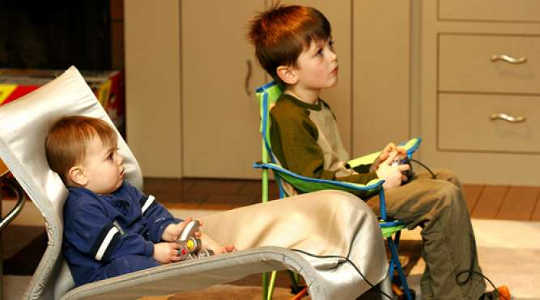 Six decades of research suggest the effect of media violence on aggressive behavior is the same across different cultures.

It is so common for self-employed people to have ADHD, the disorder could be renamed “the entrepreneur’s trait.”
 Low-income black students who have at least one black teacher in elementary school are significantly more likely to graduate from high school and consider college, research shows.
 Hibernating animals awaken in spring. Likewise, humanity has been asleep, mired in illusion, and it is now awakening. We glimpsed this truth in our winter dream; now millions of us stir, awaken, and begin to build our truthful experience.
 With the avalanche of unkind words and deeds engulfing our lives today, it's time to buck the trend and resist. The goal is to move from judgment and feelings of separation to acceptance and connection. Acts of kindness are what will get us there.
 I work hard to refrain from judging other people, even when they are making it very, very hard to not judge them. I have come to realize that judgment is not really my job.
 Gender plays a significant role in the relationship between a person’s weight and the socioeconomic status of the people in their lives, research suggests.
 Believing is as automatic as walking or talking or sneezing, and about as noteworthy. Deprived of our-ists and -isms, would we behave differently than we do now? Who would we be without our beliefs?
 A new study shows that some people have a mild but consistent set of tendencies to take the quicker and simpler path when thinking about logical challenges, the people around them, the societies they live in, and even spirituality.
 By the age of six, girls become less likely than boys to associate brilliance with their own gender and are more likely to avoid anything they think may require it.
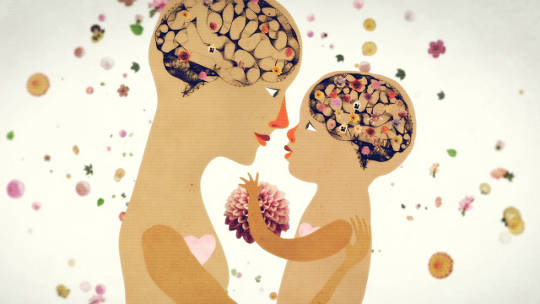 Have you ever wondered why you were prone to bouts of moodiness or why you were always so easy going? Turns out personality could be linked to brain shape, according to new research.

Consider slogans such as “Make America great again”, used by Donald Trump, or “Take back control”, used by the Brexit campaign. Both slogans were the perfect pitch to mobilize what are called collective narcissists.
 Many public conversations we have about science-related issues involve communicating risks: describing them, comparing them and trying to inspire action to avoid or mitigate them.
 The election divided the year into “before” and “after.” But there remain signs of hope for 2017.
 In recent years, we’ve started to see cases of promising sharing and collaborative practices falling into the traps of neoliberal ways of thinking and doing
 It was a few days after Halloween, and the Butterfingers had already disappeared. A bowl of Tootsie Rolls and lollipops sat on a shelf in the meeting room, resigned in their plain, wrinkled wrappers, and waiting for a desperate staffer.
 Mahatma Gandhi once instructed his devotees to “be the change you wish to see in the world.” His point was: don’t identify the problems of the world and kvetch over the shortcomings of humanity. He advocated instead actively embodying the higher qualities of being...
 There is a story that has kept popping up in my work over the years. It is one of the tales of Nasruddin, a Sufi amalgam of wise man and fool. He has the peculiar gift of both acting out our basic confusion and at the same time opening us up to our deeper wisdom.
The quest for happiness often leads to frustration, as many fail to realize that the...

Reaching sixty can evoke complex emotions, blending relief with ongoing ambition. This...

The quest for life's purpose often leads to unsatisfactory answers. This article...

Imagine going through one of the most physically and emotionally demanding experiences...

Romantic love is a complex emotion shaped by historical, cultural, and biological...

Daily actions often conflict with personal beliefs due to past experiences. By utilizing...

Have you ever argued over something that wasn't actually said? From cultural differences...

Therapists often use dream interpretation to delve into patients' emotions, but true...