
Happiness & Success
Achieving Happiness Through Acceptance of Life
The quest for happiness often leads to frustration, as many fail to realize that the...









Okay. You’ve got some kind of symptom. Whether you consider it to be the result of an accident, some organism, or just bad luck, you’ve got something to deal with, something to understand, some action to take.

If you'll pardon the levity, most of us are afraid of fear. We think it's a bad thing. Because so many of our experiences with fear have been negative, we fail to see fear as positive or useful. It is both. Let me repeat: Fear is positive and useful.

In this world it is very natural to worry about our loved ones. We don’t want them to be hurt or to suffer in any way. Yet what if this worry is somehow hurting instead of helping? For years my mom has struggled with severe migraines. One night I was lying in bed thinking about her and...
Reflecting on life often reveals how worries and insecurities overshadow the richness of experiences. Embracing ten key principles can shift perspectives, emphasizing that true happiness stems from within, shaped by thoughts rather than external circumstances. By accepting reality and understanding the nature of thought, one can cultivate a fulfilling life.

Young children exhibit a positivity bias, often viewing others through an overly optimistic lens. This tendency can lead to challenges in critical thinking and accepting constructive feedback. Understanding the mechanisms behind this bias can help caregivers guide children towards more balanced evaluations of themselves and others as they grow.
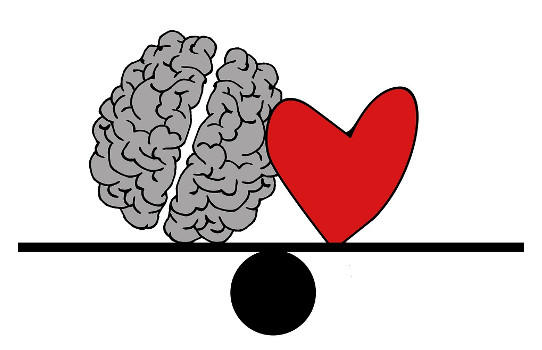
I used to get really freaked out by the idea that the more I turned to Love, the more the ego would roar at me and whip me back into place. I am well aware that the ego will pull out any evidence to “prove” to us that we are not of Love. Some have referred to this as an “ego backlash.”
Generally we think of fear as something negative to be conquered, however fear isn’t always bad. In the right circumstances and in small doses it looks like caution or prudence, and it can play a constructive role in your decision making.
How do you shed light on fear, and see it for what it really is? You question it by asking, “Says who?” Like a boogieman in your mind, you need to stand up to it and let it know who’s in control and the boss of your thoughts. It’s either you or your fear-based thought. It’s important to decide who’s really in charge of your thinking.

Fear is one of the most fascinating and crippling human emotions. All of us, at one time or another, have been overcome with fear. There are two kinds of fear: actual fear and psychological fear.

Fear is one of our greatest teachers. From the time we have our first childhood lesson of keeping our hands off the hot stove to our mature ability to recognize danger and get out of the way, fear has earned our respect and has tremendous influence over our behavior. But sometimes fear holds us back...

The way you think about decisions gives you a remarkable decision-making super power that enables you to make decisions with confidence even when you have just the smallest glimpse of data. As a matter of fact it’s so good that, if you were the only one who had it, you could charge a fortune on your own psychic hotline. Fortunately for the rest of us, we all come hard-wired with this amazing capability, and all we have to do is learn to use it effectively.

Within two weeks, 94 percent of women survivors will experience PTSD. #HealMeToo wants to give them a place to share and recover.

It is vital that we learn to tell the difference between a prompting from our Spirits and one coming from the fearful ego — our own, or those of others. Any call to action not coming through your Spirit as inspiration can probably be labeled as a should, an...
 A while back, in a conversation with my inner guidance, I was trying to find out some specifics on a project that I was working on. As in, when is this going to take place? Who's going to be handling it? Where is it going to be done? When is it going to be complete? All questions that my restless mind wanted to know. NOW!
 Many of the fears that parents have and try to hide from their children are not quite hidden. Emotional fears, financial, or any fear at all is picked up on by children. The good news is that fear is normal. We all have fears...
 No submarine could operate without its sonar, no driver without maps and signs. Yet most of us arrive at adulthood with many of our inner signal readers numbed out — or totally blocked.
 When asked how he had become so successful, he replied, that until days ago he was living as the “Other”. “What is the Other?” asked Pilar. “The Other believes that the obligation of man is to spend a lifetime thinking about how to have security...
 Because of recent global financial upheavals, people are more aware than ever of their need to feel that the ground beneath them won’t open up and swallow them whole. Even those who know they can count on friends, family, and community to support them in a time of crisis long to...
 I feel fear exactly as you do. I’m certainly no daredevil, despite what you might expect of a member of The Hollywood Stuntmen’s Hall of Fame! Nor am I an “adrenaline junkie,” despite the Guinness World Records I hold.
 If you’re anything like me, you haven’t gotten along too well with your fear up to now. You two may spend a lot of time together, but I doubt you’re very friendly. It doesn’t have to be that way.
 The Oxford dictionary defines chaos as complete disorder or confusion. In general when we speak of chaos we associate it with a negative state and negative energy. When someone says, “My life is chaotic” or “Chaos is everywhere” we understand that person to mean, “My life is a mess and I am a mess”.
The quest for happiness often leads to frustration, as many fail to realize that the...

Reaching sixty can evoke complex emotions, blending relief with ongoing ambition. This...

The quest for life's purpose often leads to unsatisfactory answers. This article...

Romantic love is a complex emotion shaped by historical, cultural, and biological...

Imagine going through one of the most physically and emotionally demanding experiences...

Have you ever argued over something that wasn't actually said? From cultural differences...

Daily actions often conflict with personal beliefs due to past experiences. By utilizing...

Therapists often use dream interpretation to delve into patients' emotions, but true...