In This Article
- Why separation is one of humanity's greatest illusions.
- How religion, education, and culture reinforce the belief that we are separate.
- The powerful "That's Me" practice for transforming judgment into self-awareness.
- A personal story that reveals how easily we practice the very behaviors we condemn.
- How recognizing ourselves in others leads to compassion, healing, and inner peace.
Perhaps the greatest error, or sin, of humankind is the devolution into separation. We see ourselves as separate from everything: from nature, from each other, from God, and even from our true Self. Many people feel as if it's them against the world, which of course includes everyone and everything.
We even see ourselves as separate from our body, from our diseases, from our addictions, our fears, and anything else that is taking place within us. Thus, we hold an antagonistic stance toward everything, and toward life itself.
After all, we feel that life, and death in the form of aging or disease, is out to get us. We constantly see life as something outside ourselves, something we must struggle against, and thus we live it that way.
The Teachings of Our Religions
And the teachings of our religions can often feel confusing. We are told to love one another, that everyone is our neighbor, and Jesus even told us that we were like him. He said that the things he did, we could do also.
Yet while the teachings themselves point toward unity and compassion, the way they are sometimes presented or practiced can send a very different message. We are told that one man, or one religion, is good while the other is bad. Killing is bad, yet going to war is good. There are many double standards and conflicting messages.
Our educational system teaches the same subjects and follows a shared curriculum, thus implying that we are all the same. Yet, at the same time, it reinforces the idea that we are separate from one another: we are often encouraged to compete rather than cooperate, to compare ourselves with others instead of recognizing that we are all part of the same team.
When we compare ourselves with others, whether in our family, our neighborhood, or our world, we don't see the similarities. We see the differences. Yet those differences, when looked at closely and honestly, will often reveal similarities.
There But for the Grace of God...
Many times, people might exclaim when seeing someone in dire straits, "There but for the grace of God go I." In other words, they recognize that the other person is an alternate possibility. They too might have been the homeless person, the person in the car accident, or the one with cancer.
But what if we went one step further? What if, instead of simply recognizing that another person's circumstances could have been our own, we began to see everyone as a mirror of ourselves? What if every person we judge reflects some aspect of our own nature, even if it appears in a different form?
I've started playing with the term "That's Me." I use it when I see something in someone that I might tend to judge or criticize. I stop and say, "That's me!" This forces me to look at how I also might, at times, portray the same behavior or personality trait that the other person is demonstrating.
See someone who is upset with a grocery clerk? That's me. Haven't we all, at times, whether out loud or just inside our own mind, berated the clerk for being slow or rude or whatever? And haven't we also, at times, been slow or rude? Yup, "That's me."
The more we can start to see the "That's Me" in others, the more compassion and acceptance become our norm. Because we are not really separate from others. We are all aspects of each other, with some leaning more heavily toward one trait than another. But the traits and tendencies are all there. Some more, some less. So yes, that's me.
A Lesson in Shunning
I have a friend who was raised as a Jehovah's Witness. Through her stories about growing up, I learned about the practice of shunning as a response when someone in the community was judged to have done something wrong or sinful.
For example, if a teenage girl became pregnant, rather than being guided and supported, she was shunned. She would be excluded from community activities and from attending church, and members of the congregation would not speak to her.
Of course, this practice is not exclusive to that religion. Other religions have practiced similar forms of exclusion. Yet when I first heard about it, I was shocked. I couldn't imagine how people could treat another human being that way.
Then I remembered my own "That's Me" practice. I asked myself whether I had ever done something similar. At first, my answer was no. But then I remembered something that had happened when I was in high school.
My best friend went behind my back and asked my boyfriend out while I was away for the weekend. When I found out, I felt betrayed. I never spoke to her again. Not for a month. Not for a year. For thirty years.
Thirty years later, after much reflection, I realized that I had never even given her the opportunity to explain herself. I contacted her and apologized for not giving her that chance.
The very behavior that I had found so abhorrent in others was something I had practiced myself. There I was, shunning someone who had been my best friend. I probably didn't even know the word at the time, but that's exactly what I had done.
"That's me."
As I looked back over my life, I could see other times when I had simply locked people out because of something they had done. The details were different, but the underlying behavior was the same.
Looking in the Mirror
When we honestly examine our own lives, both past and present, we begin to notice similarities between ourselves and the behaviors we judge in the world around us. Even the behaviors we see exhibited by politicians, celebrities, or others in the news can become opportunities for self-reflection. If we are willing to look honestly, we will often discover that we too express some form of the same tendency, even if it appears in a different way or to a lesser degree.
We've all had childhoods that have marked us in one way or another. Someone may exhibit the results of that childhood in one way, and you in another, yet there we both are: products of trauma, disappointment, and stressful experiences.
We are all, in one way or another, messed up. None of us is perfect. None of us has it all together. We are all students on this planet. We are all learning to transcend our challenges and limitations and to create a better world and a better experience of life.
While you may see others as way off track, perhaps they are simply modeling the extreme version of a behavior that you also, at times, exhibit. Impatience in you may show up as extreme anger in another. Fear in you may show up as withdrawal or lashing out in another.
We all have the same basic issues: a belief in the lack of love, a certain level of low self-esteem in one area or another, and a learned belief that life is hard. Each individual may express those beliefs differently, yet at the root they spring from the same sense of lack: lack of love, lack of time, lack of money, lack of intelligence, lack of good looks, lack of self-confidence. Whatever form it takes, it is still a belief in lack.
That realization can be a very humbling experience. Yet it is also a very powerful one. It moves us away from judging others and toward compassion and examining our own lives. That's when real growth and healing can take place.
Practicing "That's Me"
We can practice the "That's Me" observation anywhere, anytime. You're driving in traffic and someone cuts you off or drives in a way you judge to be inappropriate. Instead of immediately becoming upset with that person, turn your attention inward and ask yourself when you have exhibited that same or a similar behavior. Perhaps it happened years ago. Perhaps it still happens today. Or perhaps it simply reveals a tendency within you that is asking to be acknowledged before it grows into something larger.
I feel that everything in our lives is there for a reason. Every encounter can bring us clarity, a lesson, guidance, or an example to follow—or perhaps not to follow. But ultimately the message is always about us, not the other person. They are simply the messenger, bringing us something to reflect upon and acknowledge.
The "That's Me" practice has become a powerful tool for me because it puts the focus back where it belongs: on my own personal growth and my own peace of mind. It allows me to reclaim my power by changing the one person I actually have the ability to change: myself.
We can't change the actions or behavior of others, though I know we'd all love to sometimes and have also tried at other times. But we also know, from experience, that trying to change others never worked. The only person we can truly change is ourselves.
Every person we meet becomes either a reminder of who we have been or an invitation to become someone better. Every encounter offers another opportunity to replace judgment with understanding, separation with connection, and criticism with compassion.
Perhaps that's the hidden gift within those two simple words: That's me.
About The Author
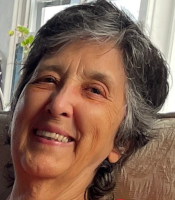 Marie T. Russell is the founder of InnerSelf Magazine (founded 1985). She also produced and hosted a weekly South Florida radio broadcast, Inner Power, from 1992-1995 which focused on themes such as self-esteem, personal empowerment, and well-being. Her articles focus on transformation and reconnecting with our own inner source of joy and creativity.
Creative Commons 3.0: This article is licensed under a Creative Commons Attribution-Share Alike 4.0 License. Attribute the author: Marie T. Russell, InnerSelf.com. Link back to the article: This article originally appeared on InnerSelf.com
Related Books:
-
The Untethered Soul: The Journey Beyond Yourself
Michael A. Singer invites readers to step back from the constant chatter of the mind and discover the peaceful awareness beneath it. His insights complement the "That's Me" practice by helping us observe our judgments and emotional reactions without becoming trapped by them, opening the door to greater compassion and self-understanding.
Amazon: https://www.amazon.com/exec/obidos/ASIN/1626250766/innerselfcom
-
Loving What Is: Four Questions That Can Change Your Life
Byron Katie presents a simple yet profound process for questioning the thoughts that create suffering. Her approach encourages readers to investigate judgments about others and discover how those judgments often point back to themselves, making this book a natural companion to the ideas explored in this article.
Amazon: https://www.amazon.com/exec/obidos/ASIN/1400045371/innerselfcom
-
The Four Agreements: A Practical Guide to Personal Freedom
Drawing on timeless Toltec wisdom, Don Miguel Ruiz offers four practical principles for living with greater awareness and authenticity. His emphasis on releasing assumptions, avoiding personal judgments, and taking responsibility for our own lives reinforces the article's message that genuine transformation begins within ourselves.
Amazon: https://www.amazon.com/exec/obidos/ASIN/1878424319/innerselfcom
Article Recap:
The belief that we are separate from one another often leads to judgment, conflict, and suffering. By practicing the simple observation, "That's me," we begin recognizing ourselves in others, replacing criticism with compassion and discovering opportunities for personal healing and spiritual growth.
#SelfAwareness #PersonalGrowth #Compassion #Judgment #Forgiveness
#SpiritualGrowth #InnerHealing #ConsciousLiving #SelfReflection #Unity
#Relationships #Mindfulness #EmotionalHealing #InnerPeace #MarieTRussell