







Deep within the heart of the African rainforest lives a people whose existence challenges everything modern civilization assumes about progress, happiness, and our relationship with the natural world. Their story offers profound insights into sustainable living, community consciousness, and the possibility of human societies existing in genuine ecological balance.
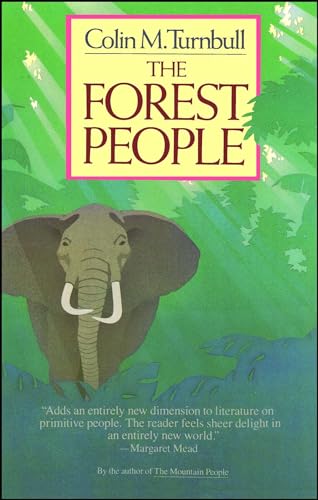
This remarkable account takes readers on an ethnographic journey into the lives of the Mbuti people of the Congo, revealing a culture that has thrived for centuries in one of Earth's most complex and biodiverse ecosystems. What emerges is not simply an academic study of indigenous peoples, but a transformative meditation on what it means to live in true harmony with the environment. The narrative invites you to examine your own assumptions about civilization, progress, and what constitutes a fulfilling human existence.
The Mbuti represent something increasingly rare in our world: a society where people live as integral members of their ecosystem rather than as dominators of it. Through detailed observation and intimate engagement, readers discover how this forest community has developed sophisticated ecological knowledge accumulated over countless generations. They understand the rhythms of the forest not through scientific instruments or abstract data, but through direct sensory experience and intuitive wisdom. This knowledge systems reveals how humans can extract what they need for survival while maintaining the forest's regenerative capacity. It demonstrates that sustainability is not a modern invention but rather a timeless principle that some cultures have honored since time immemorial.
What makes this exploration particularly valuable for contemporary readers is how it illuminates the spiritual and psychological dimensions of environmental harmony. The Mbuti do not separate their spiritual beliefs from their practical interactions with nature. Their rituals, celebrations, and daily practices reflect an understanding that humans are not separate from nature but fundamentally woven into the fabric of the living world. This integrated worldview contrasts sharply with the fragmented consciousness of industrial societies, where spirituality, economics, and environmental concerns are treated as separate domains.
The narrative reveals how the forest provides not just physical sustenance but also psychological and spiritual nourishment. The people's sense of belonging, purpose, and joy emerges directly from their relationship with their environment. Their music, art, games, and social structures all reflect and reinforce their connection to the living world around them. For readers seeking to understand how humans can find genuine fulfillment while respecting planetary boundaries, this portrait offers invaluable insights.
Throughout the text, readers encounter detailed descriptions of daily life that illuminate practical wisdom about resource use, community cooperation, and conflict resolution. The Mbuti demonstrate how to organize society around principles of sharing, equality, and collective decision-making. These social structures evolved in direct relationship to their environment, showing how ecological sustainability and social justice are deeply interconnected.
The work also addresses the broader question of cultural change and environmental impact. As the Mbuti encounter outside influences and pressures, readers witness the fragile nature of sustainable societies and the destructive consequences of imposing external economic systems on cultures with different values and practices. This has profound implications for contemporary environmental challenges and the importance of preserving diverse cultural approaches to human-nature relationships.
For anyone interested in environmental solutions, personal transformation, or spiritual growth, this ethnographic exploration offers far more than historical information. It provides a mirror in which to reflect on contemporary life and its environmental costs. It challenges readers to reconsider what progress truly means and whether the path of modern industrial civilization is the only way humans can live. Most importantly, it suggests that alternative ways of organizing human society in balance with natural systems are not merely theoretical possibilities but have been successfully practiced and can offer guidance for creating more sustainable and spiritually fulfilling futures.