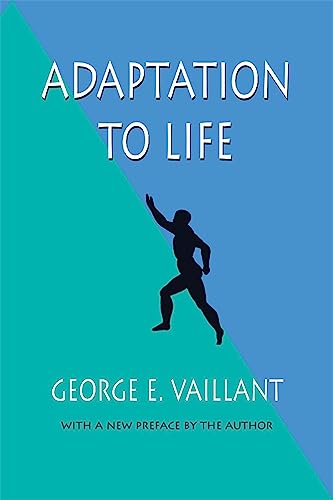












Have you ever wondered why some people seem to bounce back from adversity while others struggle? What makes certain individuals thrive despite overwhelming obstacles, while others become trapped by their circumstances? The answers lie in understanding the remarkable human capacity for adaptationâa concept that forms the foundation of one of psychology's most compelling investigations into how we actually change and grow throughout our lives.
This groundbreaking work emerges from one of the longest and most rigorous psychological studies ever conducted. For over fifty years, researchers followed real people through the full arc of their lives, documenting not just what happened to them, but how they responded to life's inevitable challenges. The result is a profound exploration of the mechanisms we useâoften unconsciouslyâto cope with stress, trauma, loss, and change. It's a deeply human story about resilience, adaptation, and the often surprising ways that people transform themselves and their circumstances.
The central insight of this investigation is both liberating and practical: our capacity to adapt isn't fixed. It's not something we're born with in limited quantities that we either have or don't have. Rather, adaptation is a dynamic processâa set of psychological strategies and perspectives that we develop, refine, and sometimes fundamentally reinvent throughout our lives. Understanding these mechanisms can help us navigate our own challenges with greater awareness and intentionality.
One of the most valuable contributions of this research is its identification and explanation of different adaptation styles. Rather than labeling people as "successful" or "unsuccessful," the work explores the spectrum of psychological defenses and coping strategies that humans employ. Some of these strategies are unconscious and automatic, while others develop through conscious effort and self-awareness. By understanding which strategies we naturally gravitate toward, and how effective they actually are in the long run, we gain the power to make different choices.
The research reveals something counterintuitive: the coping mechanisms that feel protective in the moment aren't always the ones that lead to genuine well-being and growth. Some people unconsciously rely on denial, projection, or rationalizationâstrategies that provide temporary relief but create distance from reality. Others develop more mature approaches like sublimation, where difficult emotions are channeled into creative or productive endeavors, or humor that acknowledges pain while maintaining perspective. The most significant discovery is that we're not trapped by our initial coping patterns. With insight and intention, we can evolve toward more mature and effective ways of adapting.
What makes this exploration particularly relevant for personal transformation is its emphasis on real life over theoretical abstractions. These aren't hypothetical case studies or clinical examples. These are actual people living actual livesâstruggling with relationships, facing professional setbacks, dealing with illness and loss, experiencing joy and achievement. By following their journeys across decades, the research shows us how adaptation unfolds in the context of genuine human experience.
The implications for personal empowerment are profound. Understanding how you currently adapt to challengesâwhat strategies you unconsciously employ, what emotional patterns dominate your responsesâis the first step toward conscious evolution. When you recognize that your habitual reactions aren't inevitable but rather learned patterns that can be transformed, your relationship to difficulty shifts fundamentally. You're no longer at the mercy of your circumstances or your knee-jerk reactions. You become an active participant in your own development.
This work also addresses a crucial question: what enables some people to grow from adversity while others become diminished by it? The answer lies partly in our adaptation strategies, but also in factors like relationships, purpose, meaning-making, and what might be called psychological flexibilityâthe ability to acknowledge reality while still moving forward with intention and hope.
For anyone committed to personal growth, genuine self-understanding, and the practical work of creating a more fulfilling life, this research offers both illumination and guidance. It's a mirror reflecting back how you actually cope, combined with a roadmap toward more conscious, intentional, and ultimately more satisfying ways of being human. By understanding adaptation, you understand yourselfâand that understanding is the foundation of all meaningful change.