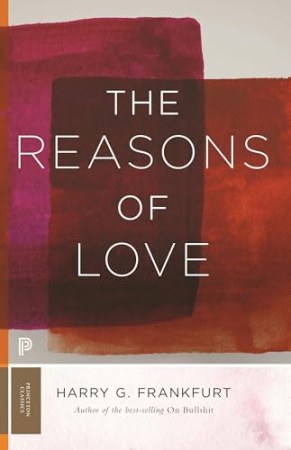









What drives us to love another person? This fundamental question lies at the heart of one of contemporary philosophy's most compelling explorations into human connection and meaning. Rather than offering romantic platitudes or relationship advice, this philosophical work invites readers into a profound investigation of love's essential nature and its relationship to our sense of purpose.
Love, as presented here, is not simply an emotion we experience passively. Instead, it emerges as something far more active and intentional: a force that shapes our values, determines what matters to us, and ultimately defines who we are. The exploration begins with a deceptively simple premise: we care about certain things and certain people. But from this basic observation springs a rich philosophical inquiry into what this caring really means and why it possesses such transformative power over our lives.
One of the most valuable insights this work provides is the distinction between love and other forms of human connection. Love, as distinguished from mere affection or preference, involves a unique kind of commitment and vulnerability. It requires us to acknowledge that someone or something matters to us in ways that transcend rational self-interest. When we truly love, we place the wellbeing of another at the center of our concerns, not because we calculate some benefit to ourselves, but because their significance to us becomes intrinsic and absolute.
For readers seeking personal growth, this philosophical examination offers a pathway to deeper self-understanding. By contemplating the nature of love, we inevitably confront questions about our own priorities, our values, and what gives our lives meaning. The work challenges readers to look beyond surface-level understandings of love as romance or family obligation and instead consider how love functions as a fundamental organizing principle of human existence.
The exploration also addresses the vulnerability inherent in loving. To love is to accept that something outside our control matters deeply to us. This acceptance is both terrifying and essential to authentic living. Rather than viewing this vulnerability as weakness, the philosophical investigation repositions it as a source of profound connection and meaning. When we love, we acknowledge our dependence on others and on circumstances beyond our control, yet we do so willingly because love makes this dependence worthwhile.
Another crucial dimension that emerges is the relationship between love and identity. We are not simply isolated individuals who then choose to love; rather, our loves fundamentally constitute who we are. Our deepest loves shape our values, our choices, and our sense of what makes life worth living. Understanding this connection helps readers recognize that developing conscious, authentic love is not separate from personal growth—it is central to it.
The work also explores how love relates to other aspects of human experience, including reason, freedom, and authenticity. Rather than positioning love as opposed to rational thought, the examination shows how love and reason intertwine in complex ways. Love is not irrational, though it cannot be reduced to rational calculation. This nuanced perspective helps readers move beyond false dichotomies that pit emotion against logic.
For those interested in spirituality and consciousness, this philosophical inquiry resonates deeply with questions about meaning, purpose, and transcendence. Love, as explored here, connects to something larger than ourselves. Through love, we participate in a form of meaning-making that touches upon the spiritual dimensions of human experience.
Whether readers are navigating their own relationships, exploring their capacity for deeper connection, or seeking to understand what gives their lives meaning, this philosophical investigation offers invaluable guidance. It invites a more conscious, reflective approach to love—one that honors both its power and its central role in creating a life of authentic purpose and fulfillment.