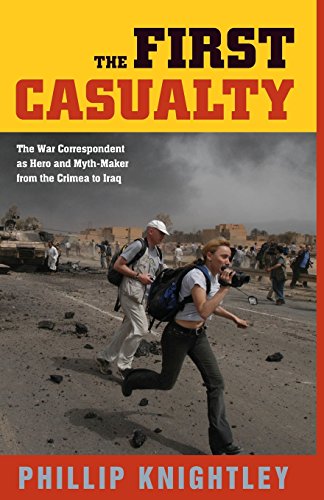
















When conflict erupts—whether on battlefields or in political arenas—the first victim is rarely a soldier or a politician. Throughout history, that first casualty has consistently been truth itself. This exploration reveals how governments, military institutions, and powerful interests have systematically manipulated information to shape public perception, control narratives, and advance agendas that might otherwise face public scrutiny.
From the Crimean War through Vietnam, from the Falkland Islands to Iraq, a pattern emerges that challenges everything we believe about the information we consume during times of crisis. Readers will discover the mechanisms through which official narratives become established as fact, how journalists become unwitting participants in propaganda efforts, and why the public remains largely unaware of the sophisticated systems designed to keep them uninformed.
This examination begins with early conflicts and demonstrates how wartime deception evolved from crude censorship into far more subtle and effective manipulation. The process accelerated with technological advancement, creating new opportunities for those in power to shape reality itself. What becomes clear is that this isn't merely about isolated incidents of misinformation—it represents a fundamental challenge to democracy itself, where an informed citizenry forms the essential foundation.
The exploration reveals how official sources deliberately mislead journalists, how military strategists understand that controlling information is as important as controlling territory, and how the machinery of propaganda operates with remarkable consistency across different nations and centuries. Readers encounter specific case studies that demonstrate these principles in action, showing how populations were convinced to support wars they might have opposed with full knowledge of the facts.
One of the most valuable insights involves understanding the relationship between power and truth. Those who hold power have the greatest motivation and resources to control information. This dynamic creates a system where ordinary citizens encounter a carefully curated version of events, filtered through institutional interests they may not fully comprehend. The implications extend far beyond military conflicts into everyday politics, corporate communication, and institutional governance.
For those interested in personal growth and social consciousness, understanding these mechanisms becomes profoundly important. When we recognize how our perception of reality is constructed and manipulated, we gain the capacity to think more critically about information we encounter. This awareness represents a crucial step toward genuine autonomy—the ability to form opinions based on authentic understanding rather than manufactured consent.
The exploration also addresses the complicity of various institutions in this process. News organizations operating under government pressure, journalists facing restrictions on what they can report, and citizens struggling to find reliable information all play roles in an ecosystem where truth becomes obscured. Understanding these dynamics helps readers recognize similar patterns in contemporary information landscapes, where the techniques described have only become more sophisticated.
This investigation matters profoundly for anyone committed to authentic democracy and social consciousness. When power remains unchallenged in its ability to shape narratives, institutions become unaccountable. Truth functions as the foundation of accountability—without it, no genuine democratic participation becomes possible. Citizens cannot make informed choices about policy, leadership, or collective direction when operating from deliberately distorted information.
The broader significance lies in recognizing that this pattern isn't inevitable. Awareness represents the first step toward change. By understanding how these systems operate, readers can develop resilience against manipulation, become more discerning consumers of information, and recognize when official narratives deserve skepticism. This knowledge empowers individuals to seek truth more actively, question authority more effectively, and contribute to a culture where transparency and honesty become fundamental values rather than exceptional occurrences.