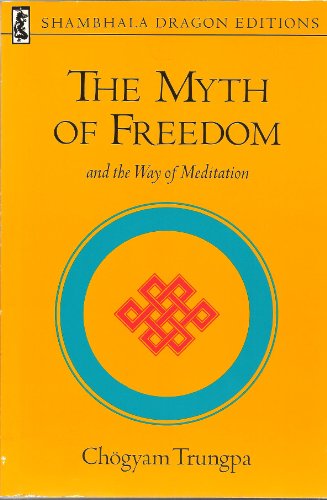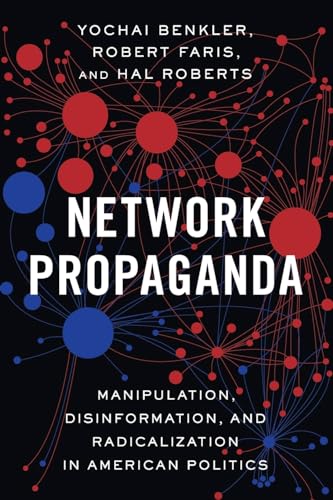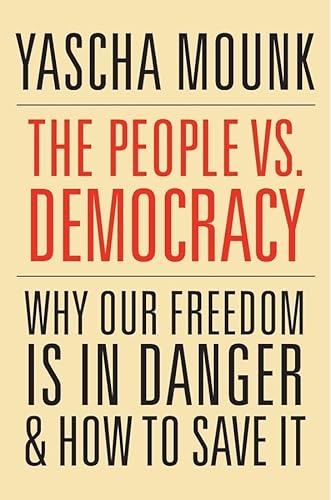









What does freedom really mean? This fundamental question lies at the heart of democratic ideals, yet few of us examine what true liberty actually entails. Beyond political rhetoric and constitutional declarations, there exists a deeper dimension of freedom that shapes not only our personal lives but the very fabric of our social and political structures.
This exploration ventures into territory that challenges conventional assumptions about liberation and self-governance. Most people operate under the assumption that freedom means the absence of external constraint—the ability to do whatever we want without interference. Yet this surface understanding obscures a more complex reality. Real freedom, it turns out, requires a kind of psychological and spiritual sophistication that most of us never develop. Without this development, what we call freedom becomes little more than license for our anxieties, prejudices, and destructive impulses to manifest in the world around us.
The path forward involves understanding the intricate relationship between individual consciousness and collective wellbeing. When we operate from confused minds filled with fear, aggression, and fundamental ignorance about our own nature, we cannot create genuinely free or just societies. Instead, we project our internal chaos outward, creating systems and institutions that mirror our confusion. This explains why political reform alone, without corresponding personal transformation, repeatedly fails to deliver the liberation it promises.
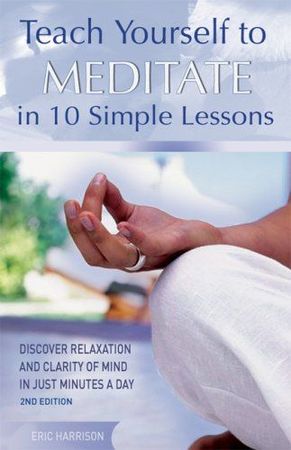
The work presented here offers a practical pathway for examining this paradox. Through meditation and honest self-inquiry, readers discover how their own mental patterns create unnecessary suffering and limitation. More importantly, they learn how these individual patterns aggregate into collective problems. The politician who hasn't examined her own desire for power creates unjust power structures. The voter who hasn't questioned his own aggression supports aggressive policies. The activist who hasn't released her own dogmatism reproduces dogmatism in new forms.
Meditation emerges not as an escape from the world's problems but as essential preparation for genuinely addressing them. By training the mind to observe itself without judgment, we develop the clarity necessary to distinguish between authentic needs and reactive impulses. This clarity becomes the foundation for wiser choices—both personal and political. We begin to understand that imposing our will on others, even for seemingly good reasons, perpetuates the very patterns of domination and control we claim to oppose.
The exploration also addresses how modern society often confuses spiritual bypassing with genuine freedom. Many contemporary movements promise liberation through positive thinking, material acquisition, or ideological commitment. Yet these approaches, however appealing, leave the fundamental confusion about our nature intact. Real freedom involves facing reality directly, including uncomfortable truths about ourselves and our societies. This honest confrontation, supported by meditation practice, gradually dissolves the defensive structures that keep us trapped.
Understanding this connection between inner freedom and outer democracy becomes increasingly urgent in our current moment. Social and political crises continue to intensify while traditional solutions prove inadequate. This reflects a fundamental mismatch: we are trying to solve complex collective problems using minds that have not been trained to perceive reality clearly or to act with genuine wisdom.
For those genuinely interested in social change and democratic renewal, this work offers something rare: a serious investigation into how personal transformation and social transformation are inseparably linked. It demonstrates that creating the world we actually want requires not just better policies or leaders, but human beings who have cultivated genuine freedom—freedom from reactive patterns, from illusion, from the compulsion to dominate or be dominated.
This is ultimately about recognizing that authentic democracy and authentic freedom are not merely political achievements. They emerge from individuals and communities that have developed the wisdom and compassion to live together without causing unnecessary harm.