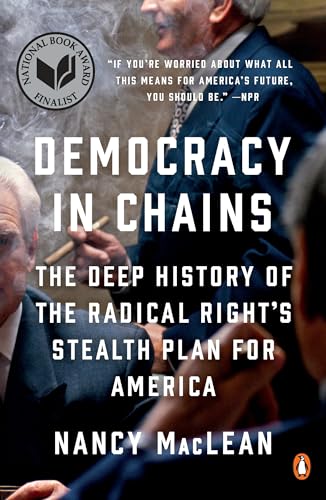















Deep within the foundations of modern democracy lies a carefully constructed system of influence that most citizens never see. This exploration reveals how a network of wealthy intellectuals and business leaders have systematically worked to reshape American governance, education, and public policy according to a radical vision of individual liberty that ultimately restricts democratic participation and concentrates power among the elite.
Through meticulous historical research and archival investigation, this work uncovers the deliberate strategies employed by influential figures to challenge the democratic consensus that emerged after World War II. The postwar period saw a broad agreement that government should actively manage the economy, provide social safety nets, and ensure fair treatment for working people. Yet a determined minority rejected this vision entirely, viewing it as tyranny. What unfolds is the story of how these ideological opponents built an intellectual movement, funded think tanks, cultivated political allies, and embedded their philosophy throughout institutions of higher learning and governance.
The narrative traces the evolution of a political philosophy that claims to champion freedom while actually concentrating decision-making power among those with the greatest wealth. By redefining freedom as the absence of taxation and regulation, this ideological movement has worked to dismantle public institutions, privatize social services, and strip away protections that ordinary citizens fought hard to establish. The book reveals how this vision was not simply theorized in academic circles but actively implemented through strategic political action, media influence, and the strategic placement of ideological allies in positions of authority.
What makes this exploration particularly valuable for readers concerned with social consciousness and personal growth is its illumination of how invisible systems shape our reality. Many people feel disconnected from political processes, sensing that their voice doesn't matter and that decisions affecting their lives are made elsewhere. This investigation explains precisely how and why that disconnection occurs. It demonstrates that political outcomes are not inevitable or accidental but result from deliberate choices made by specific actors pursuing clear agendas.
Understanding these mechanisms is liberating because it reveals what was constructed can be reconstructed differently. When readers comprehend how power actually operates, they can identify where intervention becomes possible. The book traces specific funding streams, documents particular relationships between scholars and policymakers, and shows exactly how academic ideas became concrete policies affecting millions of lives. This specificity transforms abstract concerns about democracy into concrete understanding of cause and effect.
The implications extend far beyond academic interest. As public education faces systematic underfunding and privatization efforts, as voting rights face new restrictions, and as economic inequality reaches levels not seen since the Great Depression, understanding how these conditions came to pass becomes essential. The book demonstrates that these are not natural outcomes of market forces or inevitable developments but results of deliberate ideological campaigns executed with patience and strategic precision over decades.
For those committed to personal transformation and social consciousness, this work offers crucial knowledge. It reveals that meaningful change begins with understanding current reality clearly and comprehensively. The book provides that clarity, explaining how a relatively small group of determined individuals managed to shift the entire trajectory of American governance and culture. More importantly, it suggests that if such power can be exercised in one direction, it can be exercised differently if citizens understand the mechanisms and organize accordingly.
This exploration ultimately argues that democracy itself is not inevitable or permanent. Like all human systems, it requires constant defense, active participation, and informed engagement. By revealing how a minority ideology has worked to constrain democratic possibilities, this investigation calls readers to greater consciousness about the systems governing their lives and more intentional participation in shaping the future. It transforms passive awareness into active knowledge, providing the foundation for more meaningful engagement with democracy itself.