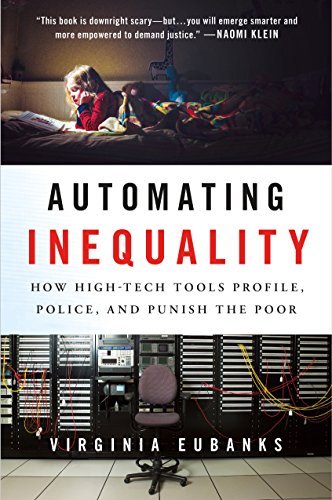
























Discover how algorithms designed to serve the public have become powerful instruments of control that disproportionately harm the most vulnerable members of society. This groundbreaking work exposes the invisible systems that govern access to essential services—from housing and healthcare to employment and social benefits—revealing how computerized decision-making has transformed the landscape of inequality in modern America.
The systems examined throughout these pages operate in the shadows of everyday life, making determinations about who deserves assistance and who does not, often without human review or the ability to appeal. What many believe to be objective, neutral technological solutions are, in fact, deeply embedded with assumptions, biases, and priorities that reflect the values of those who designed them. These automated systems manage poverty rather than alleviating it, creating what might be called a technological infrastructure of social control.
Through meticulous research and compelling real-world examples, readers will encounter the lives of those caught in the machinery of automated decision-making. A mother struggling to provide childcare must navigate a complex welfare system that penalizes her for missing documentation deadlines she never knew existed. A homeless veteran cannot access housing because an algorithm flagged him as a risk based on patterns that have nothing to do with his actual circumstances. A person seeking employment finds their opportunities limited by background check databases that perpetuate errors from their past. These are not isolated incidents but patterns woven throughout public agencies across the nation.
The exploration begins by establishing how the digital age promised efficiency and fairness. Technology, we were told, would remove human bias and emotion from decision-making processes. Yet the reality has proven far more complex and troubling. Algorithms reflect the prejudices of those who design them, the assumptions embedded in their data, and the commercial interests of the corporations that profit from their implementation. What emerges is a system that appears neutral on the surface but systematically disadvantages low-income people, people of color, immigrants, and other marginalized communities.
A central revelation involves understanding how these systems operate as tools of behavioral modification. Rather than providing unconditional support, automated welfare systems are designed to discourage applications through complexity, surveillance, and administrative burden. They track and monitor recipients in unprecedented ways, collecting vast amounts of personal data to make judgments about worthiness and risk. This represents a fundamental shift in how government relates to its most vulnerable citizens—moving from support to surveillance.
The investigation extends into specific systems affecting critical life areas: child protective services that rely on predictive algorithms to determine which families face investigation, healthcare systems that ration treatment based on algorithmic predictions about future medical needs, and criminal justice databases that perpetuate cycles of incarceration through automated decision-making. Each system illustrates how technology amplifies existing inequalities while appearing objective and beyond reproach.
What makes this examination particularly important for contemporary readers is its demonstration of how technological solutions have become substitutes for genuine policy changes. Instead of addressing root causes of poverty and inequality, institutions deploy algorithms as if they were neutral arbiters. This allows decision-makers to avoid responsibility while appearing progressive and efficient.
For readers committed to justice and social consciousness, understanding these hidden systems is essential. You will learn how to recognize algorithmic discrimination in your own communities, understand the mechanisms that perpetuate inequality in ways that feel invisible, and gain insight into why addressing these systems requires both technological literacy and moral clarity. This knowledge empowers informed citizenship and meaningful advocacy for change in systems that affect millions of lives daily.
The implications extend beyond individual circumstances to fundamental questions about dignity, justice, and what kind of society we are building when we automate decisions about human worth and need.