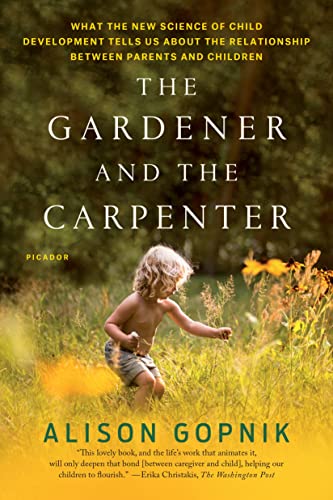

















Discover a transformative perspective on how we raise children and what it truly means to nurture the next generation. This groundbreaking exploration challenges centuries of conventional wisdom about parenting and offers a radically different framework for understanding our role as caregivers, educators, and guides.
Most of us have inherited a particular image of parenting: the careful craftsperson molding clay, shaping each stroke intentionally toward a predetermined outcome. We worry constantly about doing it right, making the correct choices, steering our children toward success. But what if this fundamental metaphor is wrong? What if we've been operating under a misguided assumption about what parenting actually is and what it's meant to accomplish?
This revolutionary work presents two contrasting approaches to child-rearing and introduces you to the profound difference between the "carpenter" model and the "gardener" model. The carpenter approach treats children as projects to be built according to detailed plans. Parents who adopt this mindset focus on measurable outcomes, structured lessons, and direct instruction. They worry about making mistakes that might derail their child's future, and they invest enormous energy in optimization and control. While this approach has dominated parenting culture, research and developmental science suggest it may actually undermine the very outcomes we're seeking.
The gardener approach, by contrast, recognizes that children are living, growing organisms with their own inherent potential. Like a gardener, parents create the conditions for flourishing—providing rich soil, adequate light, protection from harm, and space to grow. The gardener doesn't try to dictate what the plant will become or worry that a storm might damage the flower's future career prospects. Instead, gardeners understand that growth is a natural process that unfolds according to its own logic, and their role is to support that process while remaining flexible and responsive to what actually emerges.
Throughout this exploration, you'll encounter fascinating research from developmental psychology, evolutionary biology, and cognitive science. You'll discover how play—often dismissed in our achievement-obsessed culture—is actually the primary mechanism through which children learn, innovate, and develop resilience. You'll learn why children in different cultures develop in vastly different ways, suggesting that parenting is less about molding universal outcomes and more about adapting to local conditions and values. You'll explore how the intense focus on early childhood intervention and structured learning may actually narrow children's possibilities rather than expand them.
Perhaps most importantly, you'll examine what it means to let go of control and outcome-oriented parenting without abandoning your responsibility as a caregiver. This isn't about permissiveness or neglect. Instead, it's about understanding that your real job isn't to engineer your child's success but to provide a secure base from which they can safely explore the world and discover who they are meant to become.
For readers seeking personal growth and deeper understanding of family systems, this perspective offers profound implications. As you reconsider parenting through this lens, you may find yourself letting go of anxiety and perfectionism. You might discover greater presence in ordinary moments with your children. You could experience more genuine connection when you stop trying to control outcomes and start truly witnessing and supporting the unique human unfolding before you.
This work speaks to anyone involved in the care, education, or guidance of children—parents, teachers, grandparents, and mentors. It invites you into a more peaceful, more scientifically grounded, and ultimately more joyful way of being with the young people in your life. By shifting from the carpenter's blueprint to the gardener's wisdom, you'll find yourself part of something ancient and beautiful: the sacred work of nurturing life itself.