
















Happiness & Success
Achieving Happiness Through Acceptance of Life
The quest for happiness often leads to frustration, as many fail to realize that the...

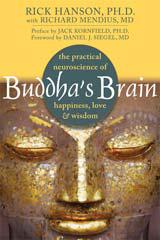
Neuroscience and ancient contemplative practices converge in this groundbreaking exploration of how we can literally reshape our brains for greater happiness, love, and wisdom. Drawing on cutting-edge brain research and time-tested Buddhist principles, this work reveals the biological underpinnings of human suffering and, more importantly, demonstrates practical pathways toward lasting well-being and inner peace.
At the heart of this transformative guide lies a simple yet profound truth: our brains are constantly changing based on our experiences, thoughts, and mental habits. This neuroplasticity means we are not stuck with the brain we were born with or the patterns developed in childhood. Instead, we possess the remarkable ability to cultivate positive mental states that become hardwired into our neural architecture over time. Every thought, emotion, and experience leaves a trace in the brain, and by understanding these mechanisms, we can deliberately create beneficial changes.
The work begins by explaining how evolution has shaped our brains, often in ways that create unnecessary suffering in modern life. Our ancestors needed a negativity bias to survive in dangerous environments, constantly scanning for threats and remembering painful experiences more vividly than pleasant ones. This ancient survival mechanism, while once adaptive, now causes us to overlook good experiences, ruminate on problems, and live in chronic stress. Understanding this evolutionary legacy helps readers recognize that their anxious or negative tendencies are not personal failures but natural brain functioning that can be transformed.
Read more ▼
10 Steps to Take Charge of Your Emotional Life
Eve A. Wood
Sylvia Boorstein

Carla Marie Manly

Viktor E. Frankl, Vincent Lenhardt
The quest for happiness often leads to frustration, as many fail to realize that the...

Reaching sixty can evoke complex emotions, blending relief with ongoing ambition. This...

The quest for life's purpose often leads to unsatisfactory answers. This article...

Romantic love is a complex emotion shaped by historical, cultural, and biological...

Imagine going through one of the most physically and emotionally demanding experiences...

Have you ever argued over something that wasn't actually said? From cultural differences...

Daily actions often conflict with personal beliefs due to past experiences. By utilizing...

Therapists often use dream interpretation to delve into patients' emotions, but true...