















Happiness & Success
Achieving Happiness Through Acceptance of Life
The quest for happiness often leads to frustration, as many fail to realize that the...

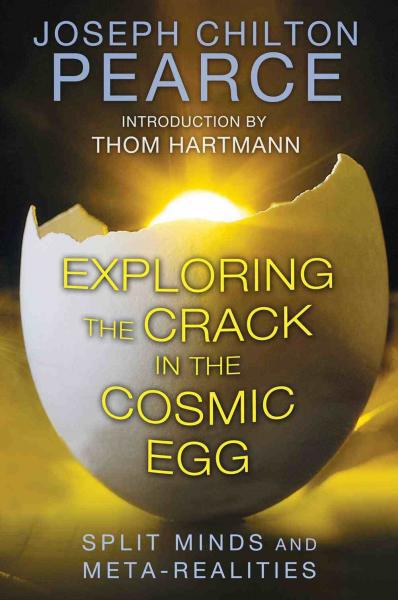
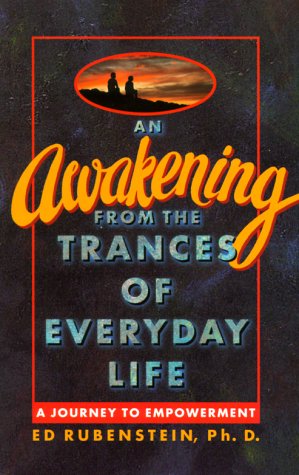
Deep within the fabric of our everyday reality lies a profound truth that most of us never question: the world we experience is largely a construction of our own consciousness, shaped by cultural conditioning, inherited beliefs, and unconscious agreements about what is possible and what is not. This groundbreaking exploration into the nature of human consciousness and reality perception offers readers a transformative journey into understanding how our minds create the very world we inhabit, and more importantly, how we can break free from limiting patterns to experience reality in entirely new ways.
At its core, this work examines the invisible boundaries that constrain human potential and perception. These boundaries, passed down through generations and reinforced by social institutions, create what might be called a "cosmic egg" of consensus reality—a shared hallucination that feels solid and unchangeable but is actually remarkably fluid and responsive to shifts in consciousness. By understanding the mechanisms through which these perceptual prisons are constructed and maintained, readers gain the tools necessary to crack open their own limited worldviews and step into expanded states of awareness and possibility.
The journey begins with an investigation into how cultural conditioning shapes perception from earliest childhood. From the moment we enter the world, we are taught what to see, how to interpret our experiences, and what constitutes "reality." This social programming is so thorough and begins so early that most people never recognize it as programming at all. Instead, they mistake their culturally-constructed perceptual filters for objective reality itself. This revelatory insight alone can begin the process of liberation, as readers start to recognize the arbitrary nature of many beliefs they've held as absolute truths.
Read more ▼
Leonardo Boff

Jane Delaford Taylor and Manoj Vijayan.
James Fadiman, Jordan Gruber
The quest for happiness often leads to frustration, as many fail to realize that the...

Reaching sixty can evoke complex emotions, blending relief with ongoing ambition. This...

The quest for life's purpose often leads to unsatisfactory answers. This article...

Imagine going through one of the most physically and emotionally demanding experiences...

Romantic love is a complex emotion shaped by historical, cultural, and biological...

Daily actions often conflict with personal beliefs due to past experiences. By utilizing...

Have you ever argued over something that wasn't actually said? From cultural differences...

Therapists often use dream interpretation to delve into patients' emotions, but true...