













Happiness & Success
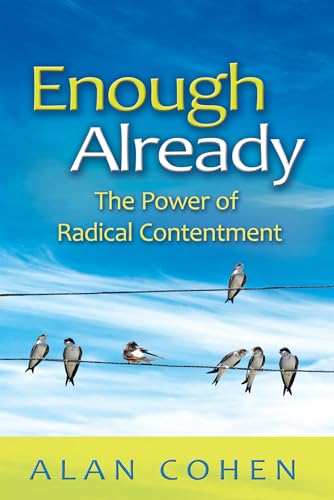
Achieving Happiness Through Acceptance of Life
The quest for happiness often leads to frustration, as many fail to realize that the...


Have you ever tried to share an important experience or insight, only to find that others dismiss your words because of who you are rather than what you're saying? Or perhaps you've struggled to make sense of your own experiences because the language and concepts available simply don't capture what you've lived through? These deeply personal yet profoundly political moments reveal a form of injustice that operates at the level of knowledge itself, shaping whose voices are heard, whose experiences are validated, and whose understanding of the world is taken seriously.
This groundbreaking philosophical work introduces readers to two interconnected forms of wrongdoing that occur in our everyday epistemic practices—the ways we give and receive knowledge, testimony, and understanding. The first type occurs when prejudice causes a hearer to give deflated credibility to a speaker's word. Imagine a woman reporting sexual harassment only to have her account automatically doubted, or a person of color describing their experience of discrimination and being told they're being too sensitive. These instances represent testimonial injustice, where identity prejudice causes us to assign less credibility to someone's words than we should.
The second form is perhaps even more insidious because it operates at a structural level. This occurs when gaps in our collective conceptual resources leave certain groups unable to make sense of significant areas of their social experience. When there are no words or shared concepts to describe what you're going through, you're left in a kind of cognitive darkness, unable to fully understand or communicate your own experience. Before terms like "sexual harassment" or "microaggression" entered common usage, countless people experienced these phenomena but lacked the linguistic tools to name them, making it nearly impossible to object to these practices or even fully comprehend what was happening to them.
Read more ▼
Matthew Desmond

Margaret Wolff

Virginia Eubanks, Eubanks

Richard Rothstein
The quest for happiness often leads to frustration, as many fail to realize that the...

Reaching sixty can evoke complex emotions, blending relief with ongoing ambition. This...

The quest for life's purpose often leads to unsatisfactory answers. This article...

Imagine going through one of the most physically and emotionally demanding experiences...

Romantic love is a complex emotion shaped by historical, cultural, and biological...

Daily actions often conflict with personal beliefs due to past experiences. By utilizing...

Have you ever argued over something that wasn't actually said? From cultural differences...

Therapists often use dream interpretation to delve into patients' emotions, but true...