

















Happiness & Success
Achieving Happiness Through Acceptance of Life
The quest for happiness often leads to frustration, as many fail to realize that the...

Understanding the intricate workings of the human mind has long been a pursuit of philosophers, scientists, and seekers of personal growth. Yet one of the most fascinating aspects of our mental landscape remains surprisingly elusive to everyday awareness: the constant, bubbling stream of thoughts that shapes our reality, influences our decisions, and colors our emotional experiences. This exploration into the nature of thinking itself offers readers a profound opportunity to step back from their mental chatter and examine the very process that defines much of human experience.
At its core, this work delves into the mechanisms of thought and how our minds construct the reality we experience moment by moment. Rather than accepting our thoughts as absolute truths or treating them as problems to be solved, readers are invited to recognize thinking as a creative process—one that generates our perceptions, interpretations, and emotional responses to life's circumstances. This fundamental shift in understanding can be transformative, offering liberation from patterns of overthinking, anxiety, and mental suffering that plague so many people in modern society.
The principles presented here draw from an understanding of the human psychological experience that emphasizes three foundational elements: the power of thought to create our perceived reality, the role of consciousness in bringing awareness to our experience, and the natural wisdom that emerges when we recognize how the system works. These aren't abstract philosophical concepts but practical insights that can immediately impact how readers navigate challenges, relationships, and personal growth.
Read more ▼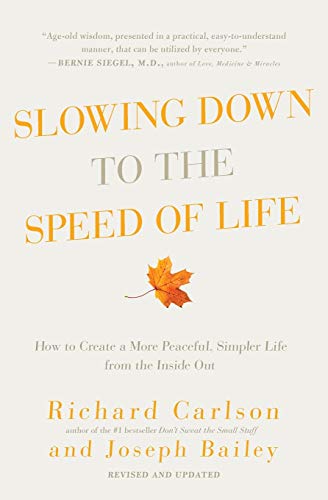
Slowing down to the Speed of Life
Richard Carlson, Joseph Bailey

Marie D. Jones

Aristotle

Sharron Murray, Mao Shing Ni
The quest for happiness often leads to frustration, as many fail to realize that the...

Reaching sixty can evoke complex emotions, blending relief with ongoing ambition. This...

The quest for life's purpose often leads to unsatisfactory answers. This article...

Imagine going through one of the most physically and emotionally demanding experiences...

Romantic love is a complex emotion shaped by historical, cultural, and biological...

Daily actions often conflict with personal beliefs due to past experiences. By utilizing...

Have you ever argued over something that wasn't actually said? From cultural differences...

Therapists often use dream interpretation to delve into patients' emotions, but true...