














Happiness & Success
Achieving Happiness Through Acceptance of Life
The quest for happiness often leads to frustration, as many fail to realize that the...

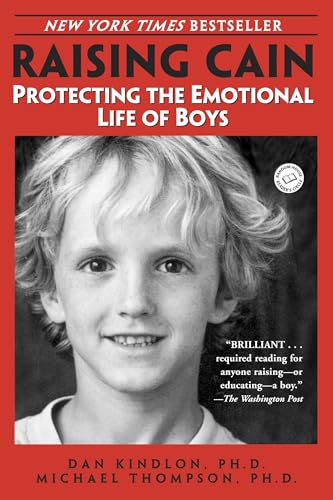
Boys in contemporary culture face a profound emotional crisis that often goes unrecognized and unaddressed. Beneath the surface of typical boyhood behavior—the roughhousing, the emotional restraint, the bravado—lies a rich inner life that society systematically teaches young males to suppress, deny, and ultimately lose touch with. This groundbreaking exploration reveals how cultural expectations create an emotional straitjacket that limits boys' capacity for authentic self-expression and sets the stage for difficulties that can persist throughout their lives.
Drawing on extensive clinical experience and comprehensive research involving hundreds of boys and their families, this work illuminates the hidden emotional world of sons, students, and young men who struggle to reconcile their genuine feelings with society's narrow definition of masculinity. Readers discover how the "Boy Code"—an unwritten set of rules about toughness, stoicism, and emotional invulnerability—begins shaping male behavior from the earliest years, often with devastating consequences for psychological health and relational capacity.
The exploration begins by examining how boys are naturally emotionally expressive and connected in early childhood, only to undergo a dramatic transformation as cultural pressures mount. Through compelling case studies and real-life examples, the work demonstrates how schools, peer groups, media, and even well-meaning parents inadvertently participate in shutting down boys' emotional awareness. The result is a generation of males who learn to channel all feelings through the narrow outlets of anger or withdrawal, unable to access or articulate the full spectrum of human emotion.
Read more ▼
Marcelle Pick
Ruth L. Miller

Ellen Rosenberg

Sharon Blackie, Angharad Wynne
The quest for happiness often leads to frustration, as many fail to realize that the...

Reaching sixty can evoke complex emotions, blending relief with ongoing ambition. This...

The quest for life's purpose often leads to unsatisfactory answers. This article...

Have you ever argued over something that wasn't actually said? From cultural differences...

Romantic love is a complex emotion shaped by historical, cultural, and biological...

Imagine going through one of the most physically and emotionally demanding experiences...

Daily actions often conflict with personal beliefs due to past experiences. By utilizing...

Therapists often use dream interpretation to delve into patients' emotions, but true...