
















Happiness & Success
Achieving Happiness Through Acceptance of Life
The quest for happiness often leads to frustration, as many fail to realize that the...

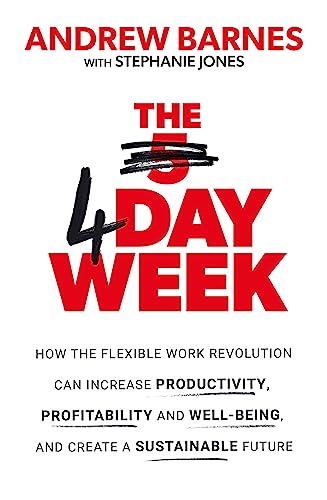
Imagine reclaiming an entire day of your week while maintaining or even increasing your productivity, income, and sense of accomplishment. This groundbreaking exploration into workplace transformation challenges one of modern society's most entrenched beliefs: that working longer hours equals greater success. Drawing from extensive real-world trials and compelling research, this work presents a revolutionary approach to how we structure our professional lives, offering a pathway to enhanced wellbeing without sacrificing career achievement.
At its core, this transformative guide examines how reducing the traditional forty-hour workweek to thirty-two hours—spread across four days instead of five—can dramatically improve quality of life while simultaneously boosting business performance. The premise isn't about cramming the same amount of work into fewer days, but rather fundamentally rethinking how we approach productivity, efficiency, and the relationship between time spent and value created. Through meticulously documented case studies and practical implementation strategies, readers discover that the conventional five-day workweek is not an immutable law of nature but a relatively recent industrial-age construct that may have outlived its usefulness.
The journey begins with a compelling examination of why the current work paradigm leaves so many feeling burned out, disconnected, and perpetually time-starved. Readers will encounter eye-opening statistics about stress-related illness, declining engagement, and the hidden costs of presenteeism—the practice of being physically present at work while mentally and emotionally exhausted. These insights provide crucial context for understanding why incremental tweaks to existing systems often fail to address the fundamental imbalance between work demands and human needs.
Read more ▼
David A. Kessler

Georgette Heyer

Stephanie Bennett Vogt
The quest for happiness often leads to frustration, as many fail to realize that the...

Reaching sixty can evoke complex emotions, blending relief with ongoing ambition. This...

The quest for life's purpose often leads to unsatisfactory answers. This article...

Romantic love is a complex emotion shaped by historical, cultural, and biological...

Imagine going through one of the most physically and emotionally demanding experiences...

Daily actions often conflict with personal beliefs due to past experiences. By utilizing...

Have you ever argued over something that wasn't actually said? From cultural differences...

Therapists often use dream interpretation to delve into patients' emotions, but true...