












Happiness & Success
Achieving Happiness Through Acceptance of Life
The quest for happiness often leads to frustration, as many fail to realize that the...

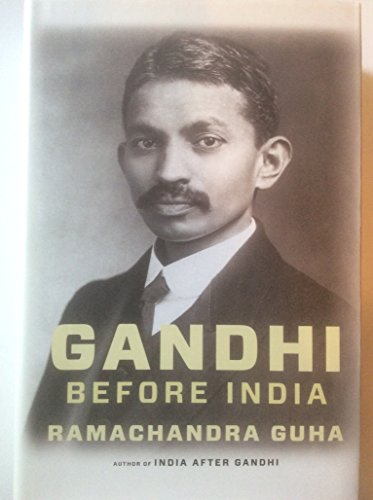
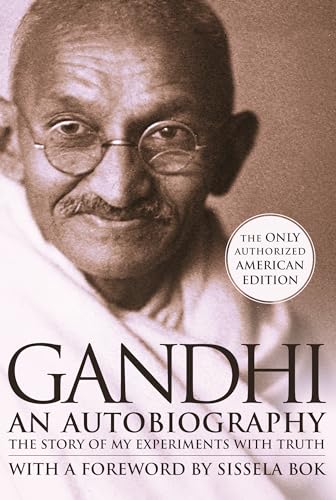
Before one of history's most transformative leaders changed the world through nonviolent resistance and moral courage, he was a struggling lawyer, an uncertain immigrant, and a young man searching for his purpose. This meticulously researched biographical work traces the first half of a remarkable life, from 1869 to 1914, revealing the formative experiences that shaped a personality capable of challenging empire itself.
Readers embarking on this journey will discover how personal transformation occurs through struggle, uncertainty, and persistent experimentation with truth. The narrative follows a shy, awkward youth from a provincial town in western India as he ventures to London for legal studies, grapples with identity and belonging in Victorian England, and eventually finds himself in South Africa confronting the brutal realities of racial discrimination. What emerges is not a predetermined path to greatness but rather a story of continuous self-discovery, repeated failure, moral wrestling, and gradual awakening to one's own power and purpose.
The South African years prove particularly revelatory, spanning more than two decades of intense personal and political development. Facing systematic racism and legal inequity, a comfortable lawyer transforms into an activist, experimenting with forms of peaceful resistance that would later shake the foundations of colonial rule. These experiences become a laboratory for testing ideas about justice, community, self-discipline, and moral action. Readers witness the birth of satyagraha, the philosophy of truth-force and nonviolent resistance, not as a sudden revelation but as an evolving practice refined through trial, error, and deep reflection.
Read more ▼
Simon Starr
Roy F. Baumeister, John Tierney

Rosalind Oxenford

Emmanuel (Spirit)
The quest for happiness often leads to frustration, as many fail to realize that the...

Reaching sixty can evoke complex emotions, blending relief with ongoing ambition. This...

The quest for life's purpose often leads to unsatisfactory answers. This article...

Imagine going through one of the most physically and emotionally demanding experiences...

Romantic love is a complex emotion shaped by historical, cultural, and biological...

Daily actions often conflict with personal beliefs due to past experiences. By utilizing...

Have you ever argued over something that wasn't actually said? From cultural differences...

Therapists often use dream interpretation to delve into patients' emotions, but true...